
Terrorists or Freedom Fighters: Weaponising Language to Delegitimise Resistance
by Amaliah Team in World on 26th March, 2026

Whilst ‘terrorist’ might be thrown around by politicians today as an objective label signifying the worst kind of irrefutable threat and violence, the reality is that the word has never been neutral. Long used as a political weapon, the term has been deployed by states to criminalise dissent, shield themselves from accountability, and ultimately discipline those who challenge power. In a world in which the truth seems more subjective than ever, who is (and who isn’t) deemed a terrorist has come to depend entirely on who gets to define the status quo and whose interests are in jeopardy.
In modern Britain, the word ‘terrorist’ has become increasingly racialised – and evermore tied to Muslim identity. For decades, Muslim communities have pointed out the glaring double standards that govern our lives. In previous generations, this might have looked like facing extra scrutiny at the airport in the wake of 9/11 or seeing a white, non-Muslim man who commits violence framed as a lone wolf failed by the system, whereas a Muslim perpetrating the same act automatically renders it terrorism – the entire Muslim community dragged into the dock alongside him.
But today, it feels like the net has widened. In our current political context, not only do we see this hypocrisy when it comes to acts of violence, but with perfectly legal functions of democracy, too.
The Muslim who refuses to make themselves palatable and who voices a political opinion that challenges the Western liberal status quo has become the ultimate terrorist.
In recent elections in the UK and beyond, we have seen how Muslims who lent their vote to independent candidates have been branded unpatriotic, extreme and sectarian. Visible Muslims are dismissed as a threat to democracy and a harbinger of Western social decline; our religious dress is a symbol of our unwillingness to integrate. The anti-migrant movement has become distilled almost exclusively as a virulent strain of Islamophobia that renders Muslims less safe than ever in the country we call home.
Nowhere, though, is this more unsettlingly apparent than with the issue of Palestine. Since the proscription of Palestine Action in the UK in July 2025, Palestine solidarity has become officially conflated with terrorism – an association that is now cemented in law. Not only does this set a worrying precedent in which spray painting a military plane is somehow legally akin to the worst kind of violence and bloodshed, but it also creates an irrefutable link in the public imagination between criticism of Israel and acts of terror, so much so that direct action against genocide becomes a national security threat. In this dystopian political climate, where the label ‘terrorist’ can be applied to whoever the state wants to silence, non-violent disruption has been reframed as extremism, solidarity recast as anti-British, and the possession of a moral compass when it comes to the issue of genocide has been all but actively criminalised.
The Political Foundations of the Term ‘Terrorist’
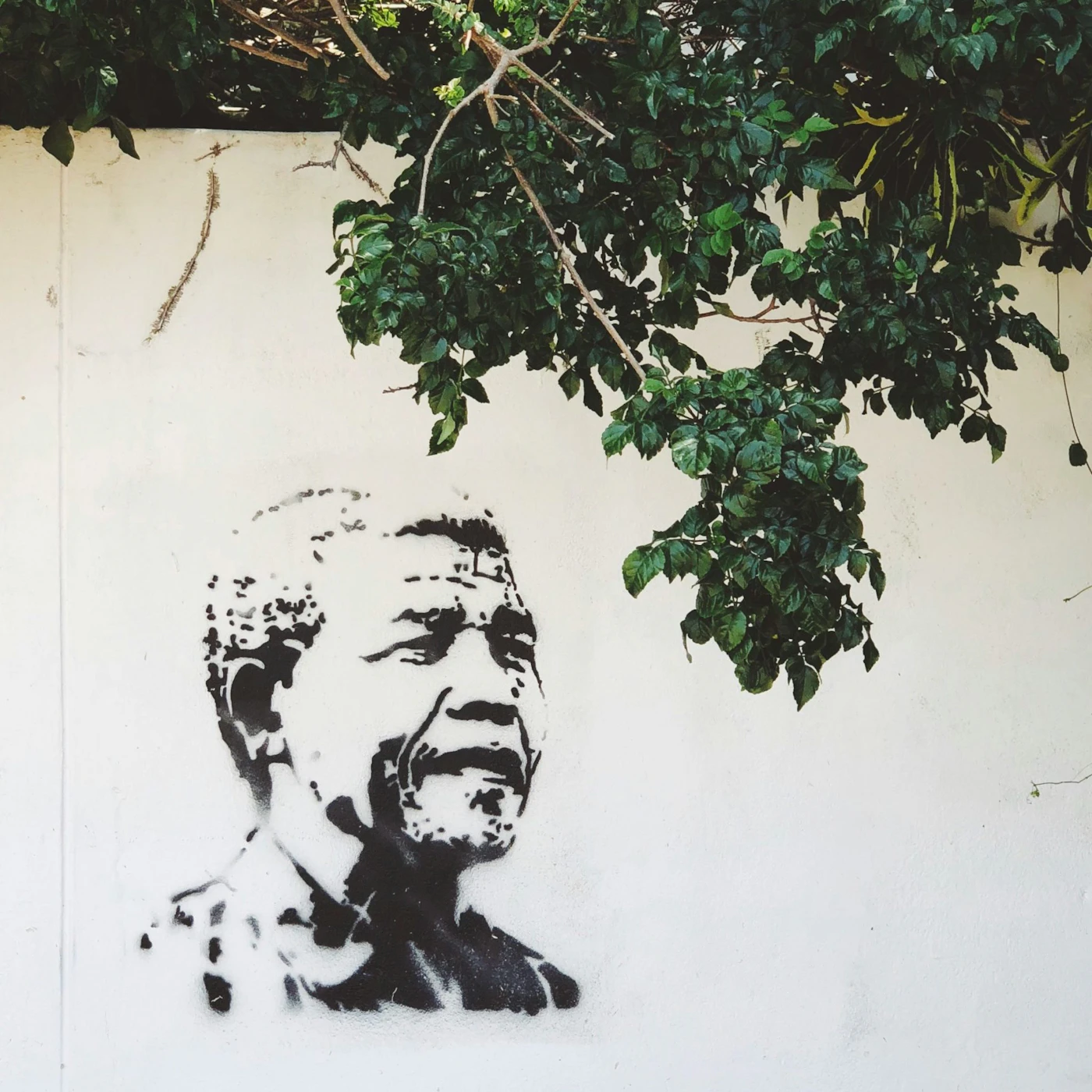
Consider Nelson Mandela, now sanctified as a global symbol of reconciliation and justice, who spent decades branded a terrorist. Like Palestine Action, the African National Congress became a proscribed organisation, and Mandela himself was cast by the West and its allies not as a freedom fighter resisting a violently racist system, but as a dangerous extremist and global pariah.
Ironically, the case of Mandela is often cited by global leaders seeking to repaint their beleaguered past as a moral outrage. Upon his death in 2013, heads of state who, merely five years prior, had officially categorised him as a terrorist, unleashed an outpouring of support and grief. It is presented as somehow shocking and unthinkable to us today that someone who has now become synonymous with liberation in fact remained on the United States’ terrorism watchlist until as recently as 2008. Our children learn about his noble lifework in classrooms across countries that vilified him less than twenty years ago, and most troubling of all, we are led to believe that the world has moved on from such glaring injustices. But have we really? Even the briefest glance at our troubling political reality today reveals that this is not something preserved in the history books. We are living this injustice today.
In the UK today, countless Palestine Action members are being held in prison on remand, not for violent acts but for direct-action protest.
This isn’t about public safety and certainly isn’t tied to the level of threat they pose; it’s about enabling states like the UK to define what the acceptable truth is allowed to be.
And when it comes to the issue of Palestine, it’s about stifling legitimate criticism of Israel by rebranding democratic civil action, or even moral opposition to genocide, as a national security threat. This is only further compounded by the fact that, in early February, the High Court ruled the ban on Palestine Action to be unlawful, solidifying how subjective and fickle definitions of terrorism really are.
We’ve seen the same playbook being used by the state again and again, whether it’s Mandela or the suffragettes, the Irish independence movement or civil rights activists in the USA. Throughout history, anyone who has challenged the status quo has first been vilified, criminalised and silenced by those in power.
But Who Gets to Define the Word “Terrorist”?
The origins of the word ‘terrorist’ reveal its shaky foundations. During the French Revolution, ‘terroriste’ referred not to rebels, but to the state itself – those enforcing violence in defence of the political order. Later, though, the term mutated into a moral cudgel used primarily by states against their adversaries, like anti-colonial activists in Algeria or members of the Irish independence movement. Their categorisation as terrorists enabled governments like the French and British to dehumanise those resisting them, dismissing their legitimate concerns and ultimately intensifying their oppression.
This colonial attitude prevails in discussions around terrorism today. States with bloodstained pasts like ours in Britain continue to deliberately define terror narrowly, excluding their own violence while obsessively policing the resistance of others. Colonial occupation, aerial bombardment, siege and starvation are (conveniently) rarely described as terrorism, whereas protest, boycotts, and civil disruption are. And that’s the point. In today’s world, the terrorists are those threatening to dismantle global hierarchies of power, not the nefarious states carpet bombing children.
In this dystopian reality, spray painting a plane can become terrorism, whereas massacring children is fair game.
Where else do we see this double-standard play out? Well, there is a reason that far-right violence in Britain continues to be treated as an unfortunate but largely depoliticised phenomenon, whereas opposition to genocide is a national security threat. Riots targeting asylum seekers, arson attacks on refugee hotels, assaults on mosques – all these acts terrorise visible Muslims like me in the most literal sense.
Seeing your places of worship, schools and community hubs violently attacked evokes far more national terror and disruption than direct action against an arms manufacturer.
Yet rarely do we hear of far-right riots being framed as terrorism, being prosecuted with comparable urgency, or used to justify sweeping new laws. If anything, they are sanitised as the legitimate concerns of ignored citizens. This double standard is by design: violence that protects the status quo is legitimised, whereas any resistance that exposes it becomes an existential threat.
Counter-Terror Laws as Tools for Repression
What has become of Palestine Action has not occurred in a vacuum. The UK’s use of counter-terror legislation has always been about policing ideology more than protecting the public. The language in the Terrorism Act of 2000 and the Counter-Terrorism and Security Act of 2015 is deliberately vague, with phrases like “encouragement,” “support,” and “association” of terrorism being elastic enough to stretch around almost any form of dissent. It is under this sinister climate that we have witnessed pensioners dragged away by police officers, facing up to fourteen years in prison for holding up placards and homes with sleeping children raided in the middle of the night for nothing more than a social media post.
Of course, Muslim communities have lived with these consequences for years. We have seen Prevent referrals for children misspelling ‘cucumber’ as ‘cooker bomb’ and mosques and community spaces turned into sites of suspicion and surveillance. What we are now witnessing is the expansion of this apparatus to anyone who meaningfully challenges Britain’s complicity in Israel’s violence. Perhaps because Palestine has historically been racialised as a Muslim concern, we have now reached the point where not only is anything other than outright support of Israel the antithesis of Britishness itself, but it is also actively penalised by law.
The Parallels Between Nelson Mandela and Palestine Action
The parallels between Palestinian activists today and the example of Mandela are stark and offer us a sombre warning. They should disturb us precisely because Mandela’s legacy has been so neatly rewritten, and we are in the midst of history repeating itself. Our history books, school curriculums and national leaders honour him now because apartheid lost. Supporting him retrospectively allows Western nation-states to cleanse their own bloodied pasts. But when his activism was controversial, and whilst apartheid endured, he was imprisoned, denounced, and abandoned by the very governments that now quote him for inspiration. The lesson here is that it is not in the past tense that we should support liberation movements, but now, in the moment, when their actions mean something beyond a story with a happy ending to teach in history lessons.
We see the same thing occurring today with Britain’s political posturing on Palestine. On the one hand, the government has recognised Palestinian statehood, is speaking the language of peace and international law, and ostensibly mourning civilian deaths, while on the other hand simultaneously criminalising and suppressing the very movements seeking an end to Israel’s genocide.
To recognise Palestine in theory whilst branding Palestinian solidarity as extremism is not simply incoherence; it is Mandela’s story retold today.
It allows the state to appear humane while ensuring nothing materially changes, and most importantly, allows Western governments to place themselves on the right side of history once the tide inevitably turns. After all, those branded terrorists today are often the ones history later vindicates.
There is a sick juxtaposition laid bare in watching history repeat itself in real time, of watching our elected representatives frame protests against violent arms manufacturers as a security threat while providing the infrastructure for genocide.
If we strip the term ‘terrorism’ of its political connotations and take it for what it truly means, it’s clear that those calling for an end to the mass-murder of civilians aren’t the real terrorists at all.

Amaliah Team
This article was written by a member of the Amaliah team or a collective team effort. You can follow us on @amaliah_tweets for the latest or head over to our Instagram @amaliah_com. If you're reading this and are thinking about contributing an article then send us an email with a brief or a full article to contribute@amaliah.com
