
Are You Chinese or Muslim? Navigating Identity and Belonging
by Hanna Fadhila in Culture & Lifestyle on 4th June, 2026

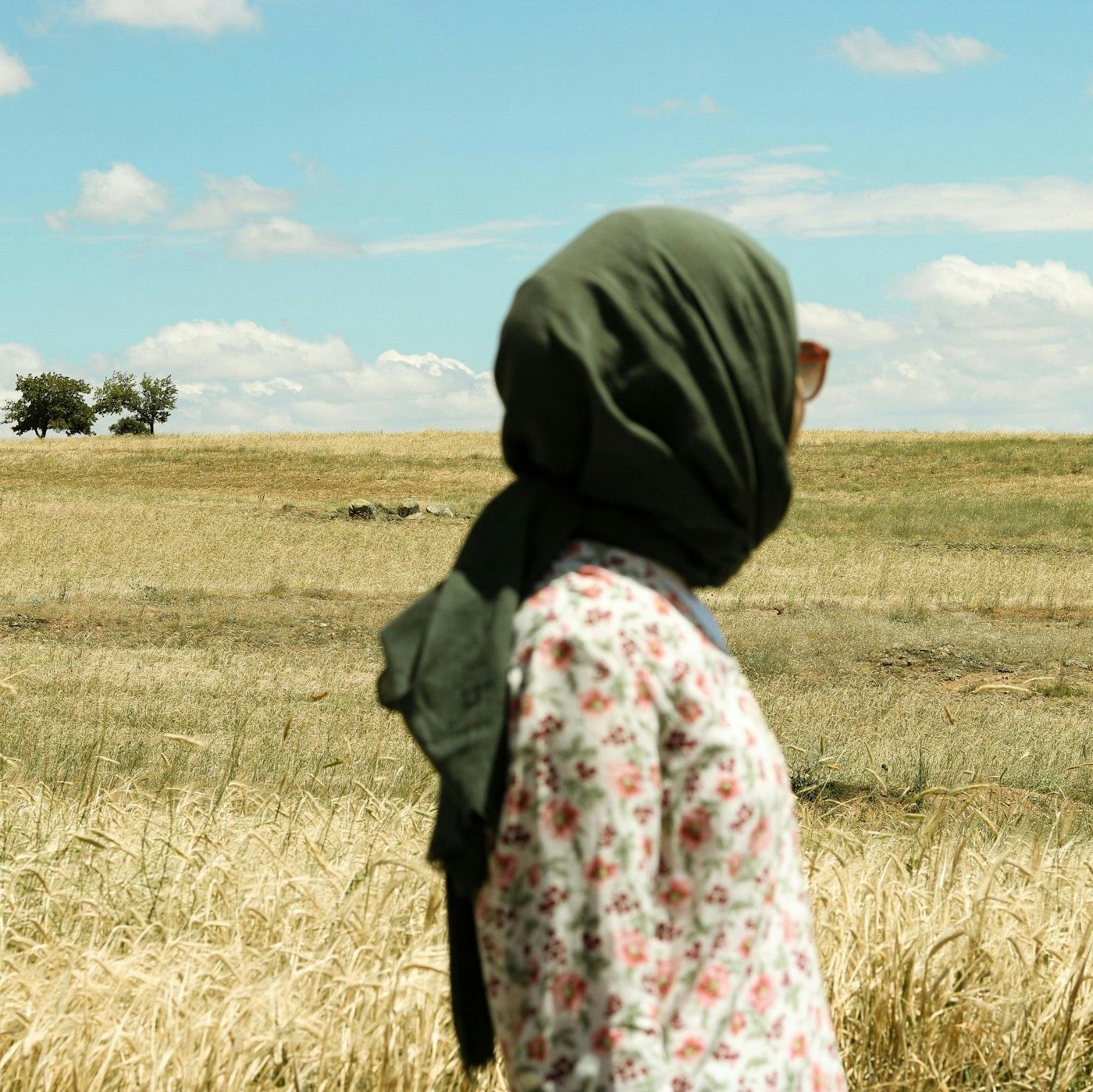
“Are you Chinese or Muslim?” my classmate asked me in the school playground. He squinted questioningly at my mum, who had just dropped me off at the school gates. She was wearing her long skirt and her hijab, square and wrapped the Indonesian way with a brooch pinned at the front. It was noticeably different from the way other mums wore theirs.
You couldn’t really blame him – in our small school in a town in Yorkshire, the majority of students were of South Asian descent. It must have been difficult for that 7-year-old boy to imagine that Muslims could look like my mum and me, with our almond-shaped eyes. And my bowl cut with a fringe – practically a rite of passage for every East/South-East Asian girl – probably added to his confusion.
Although Islam was supposed to be my point of connection with the many Muslims in my community, no one at our local mosque looked like me, and there was only one other Indonesian family in our town.
I distinctly remember squirming under the gaze of curious mosque-goers while sitting in my Qur’an class, feeling like a zoo animal. Combined with the racist anti-Chinese taunting I received from the children in my neighbourhood, I never felt quite at home, and the feeling of not fitting in has followed me for most of my life.
But in the playground, I was being taught swear words in Urdu through fits of giggles. My best friend’s mum fed me saag, which is still one of my favourite dishes to this day. Before Eid, the girls in my class would discuss their new clothes. They were confused when I said that I wouldn’t be wearing a salwar kameez because Indonesians wear different clothes for Eid.
As I grew older, I was conscious of being in a unique position. I had an understanding of my friends’ cultures (albeit an outsider’s view), but my own life was seemingly alien to them in comparison. Even the language my family used to describe our Islamic practices was different – solat, subuh, puasa (salah, fajr and fasting) – and I wouldn’t see anyone wearing a mukenah (Indonesian prayer garment) at the mosque as is customary in Indonesia.
Over time, I learnt to recount my stories in a way that was more digestible, so I wouldn’t have to explain myself.
Sometimes that meant skipping over the fact that I spent the weekend stomping on burlap sacks filled with soy beans so that my mum could make tempeh. It was like being on the outside of an inside joke when I saw others relating to each other in a way I couldn’t. Or if I found myself scrambling for words when trying to describe something particular to my culture or home life. Several times, when someone asked where I was from and I said Indonesia, they would eye my hijab and ask with a doubtful look on their face, “Are there Muslims there?”
Of course, much of this naivety can be attributed to our age at the time. But these experiences continued to follow me as I grew older. In secondary school, I remember choosing not to hang out with a group of Muslim girls after I was side-eyed when asked what my ethnicity was. At an age where being different could make you a social pariah, it was easier to just remove myself from the situation and avoid my identity being interrogated. In some cases, it was easier to be friends with non-Muslims who had little knowledge of Islam and therefore little preconceptions of Muslim identity – something I maintained through university. Although the friends I made remain cherished friends to this day, sometimes I find myself wondering what I missed out on by not growing up with many Muslim friends.
It’s been almost two decades since I was asked whether I was Chinese or Muslim (several times, in fact). Nowadays, people have not only heard of Indonesia, but they also know that it has the largest Muslim population in the world. The idea that someone who looks like me can also be Muslim is increasingly seen as the norm rather than an exception. I’ve lived in London for five years now, where people are from everywhere, and it’s normal to take a few sentences to explain where you’re from.
I have slowly stopped editing parts of myself out – I now go out of my way to explain what tempeh is made of – and the people around me respond with curiosity rather than distaste.
I’ve also come across Muslims from all walks of life and a significant number who grew up as the ‘odd one out’ in their Muslim community. Although we do not share ethnic backgrounds or even grew up in the same countries, we share an understanding of what it’s like to have to prove that you belong to a faith that is already yours. It’s incredibly reassuring to find out that you are not the only one experiencing something so isolating.
It also helps that I have ended up forming an ethnically diverse circle of friends. We delight in finding the similarities as well as differences between our cultures. For example, did you know that men in (but not limited to) Indonesia, Somalia and Bangladesh all wear a patterned, cylindrical cloth wrapped around their waists? It’s called the sarung/macawis/lungi. It is often surprising how much we have in common beneath the surface – how different languages and words often describe the same thing. We’ve since taken turns sharing our cultural food, and every few months, I’m dragged to an Indonesian restaurant so that a friend can satisfy their rendang craving.
The biggest game-changer was surrounding myself with Muslim friends, something that would have made me anxious when I was younger, desperate not to seem too other-worldly.
One of the biggest advantages of living in London is the abundance of Muslim events and organisations made up of people from a variety of backgrounds. Not long after moving, I had built up a solid network of close Muslim friends with whom I could share my faith. As a result, it is not uncommon to bump into an acquaintance while out and about, bringing a sense of community to what is otherwise a cold and lonely city.
Recently, I was on a trip to Indonesia and picked up a mukenah for my flatmate at a market. In return, she gave me a Somali prayer dress. Two different cultures, two different garments used for one purpose – to worship Allah.
In the small reminders friends slip into conversation, in every quick stop to pray in a fitting room, and every iftar organised, I’ve found reassurance that beneath all our differences, we share the same core values and aims.
The only word I can use to describe how I feel now is relief. Relief that I feel comfortable enough to share every facet of my identity with them and that I am embraced with understanding.

Hanna Fadhila
Hanna Fadhila is a London-based ex-Software Engineer. She is currently exploring writing and art. Her days are spent wandering around the streets of London.
