
Are You Watching? – An Interview With British-Somali Actress Kosar Ali
by Furvah Shah in Culture & Lifestyle on 24th July, 2026


Not many people can say their first film role aged 17 landed them a BAFTA nomination, apart from Kosar Ali. Over five years on from her breakout performance in Rocks, the 22-year-old British-Somali actress has become one of the most exciting Muslim talents on British screens and stages. Whether she’s making us laugh in Muna and Pru, taking on tougher roles like Rocks and Dangerous Liaisons or stepping behind the scenes, Kosar brings authenticity and relatability to every role.
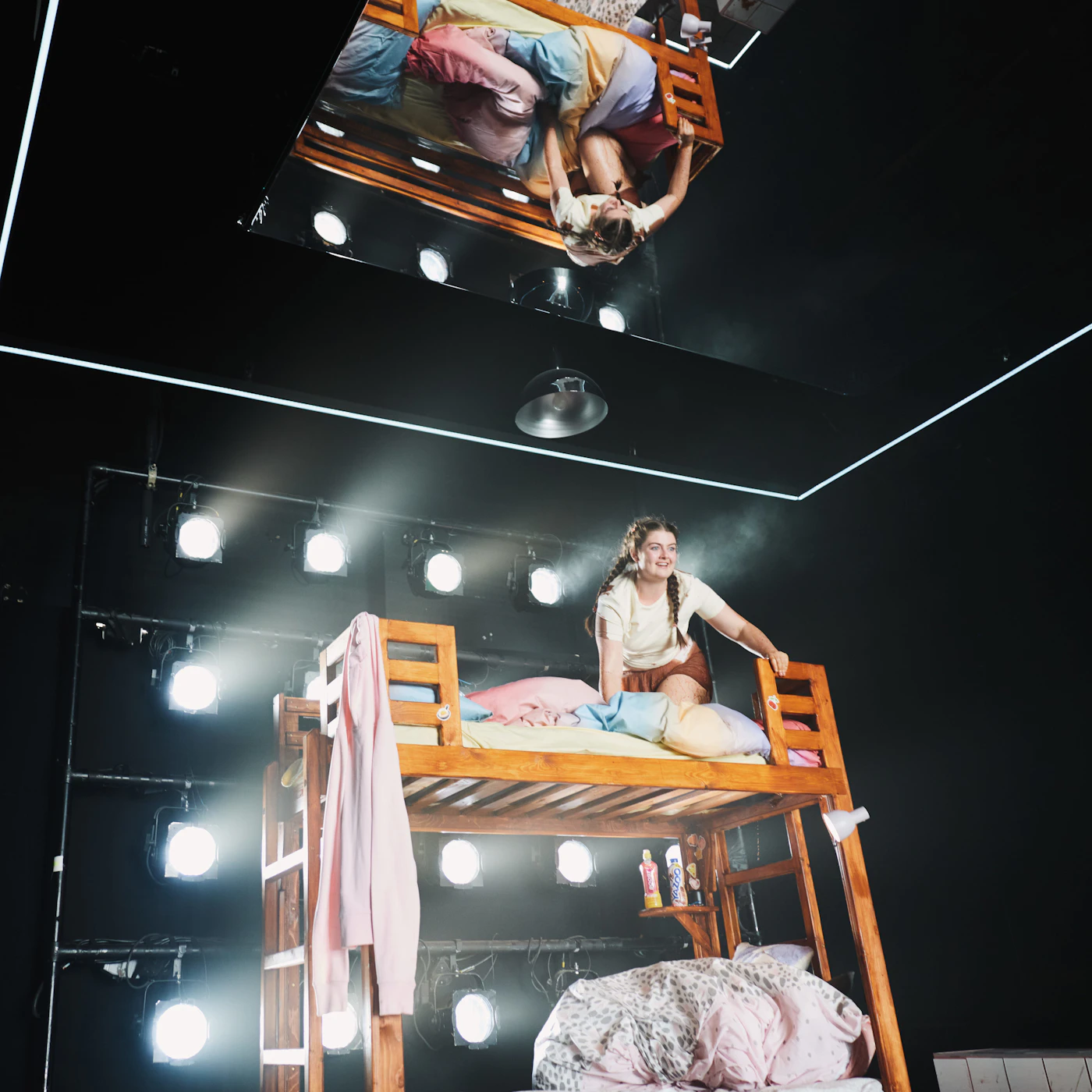
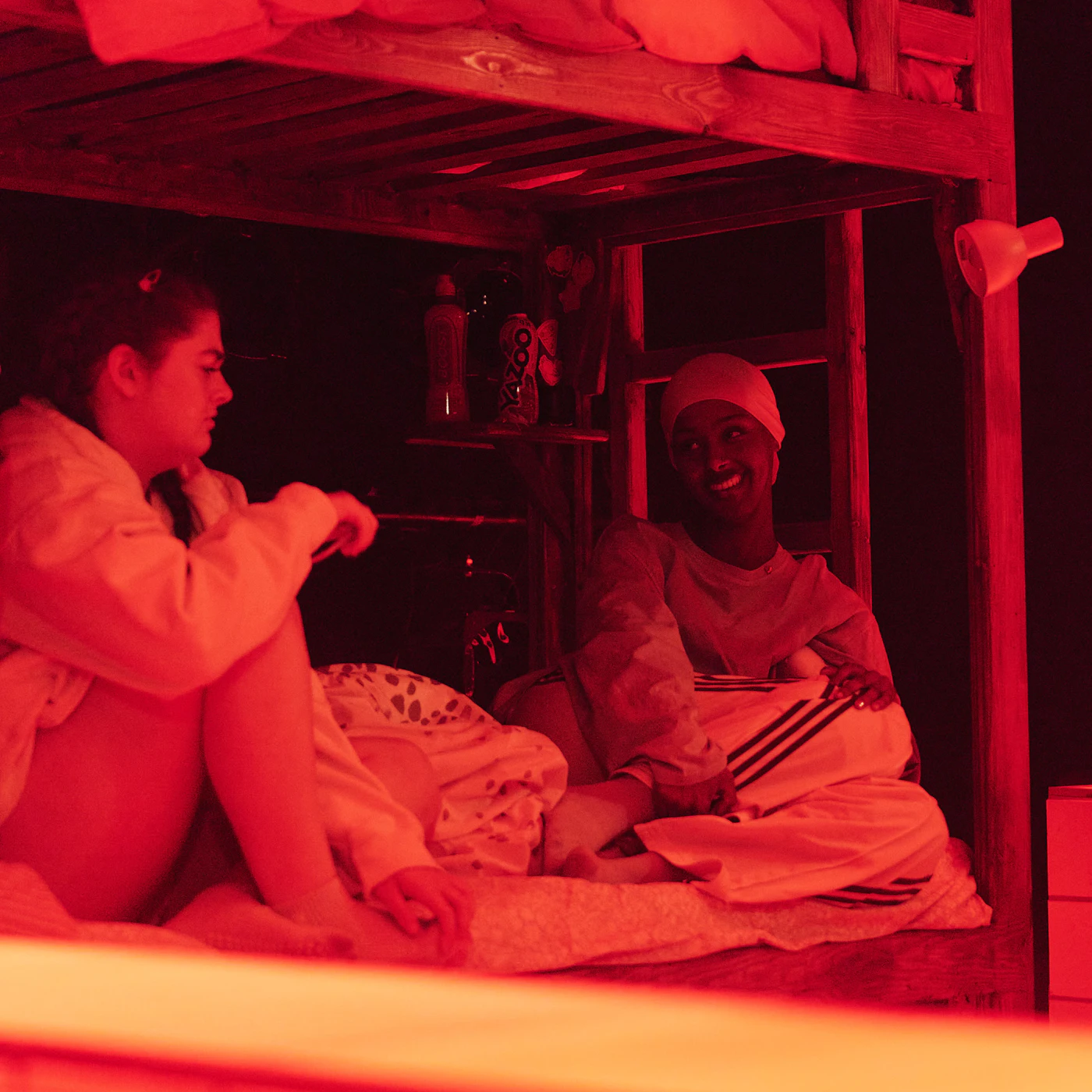
Now, Kosar has swapped the screen for the stage in Are You Watching? at the Royal Court, a play that explores voyeurism, sexual violence and complicity in the digital age. In a quiet backstage room at the West London theatre, Kosar sits down with AMALIAH to talk about representation, choosing roles with intention, and what comes next.

Tell us about your new play, Are You Watching?, and what drew you to this story?
Anything at the Royal Court interests me because that’s where I made my stage debut with Word-Play. Are You Watching? is such a special play because it really interrogates where we’re at in today’s world and how we digest media. It asks difficult questions about complicity.
It’s an intense play, it’s heavy and that moves quickly between different scenes and leaves you thinking. Georgie Dettmer, who wrote it, is incredible. This is her debut play, but she’s one of the most intelligent, humble, wise and funniest people I’ve met. Her writing was a huge part of what drew me to the project.
What do you enjoy the most about performing on stage and has anything surprised you from the experience?
To be honest, I don’t really enjoy being on stage. It’s not something that comes naturally because it’s very confronting as I struggle with social anxiety. Some actors love the idea of a live audience but I’m like “Oh my God, I’m being watched!” But that’s also why I appreciate theatre so much. As an actor and storyteller, there’s nothing more immediate. I learn a lot about myself as an actor, but also a person.
What’s surprised me most is how differently audiences react every night. Because of the subject matter, you never know what to expect. Some performances have walkouts, or hysterical laughter. The play feels completely different each night from our perspective as actors.

What do you hope people leave the theatre thinking about afterwards?
That we all have a real, moral responsibility for what we engage with online and what we put out there to the world around us. It’s so easy to scroll through social media, close your phone and move on, but it’s important to think about what you’re consuming, what’s true and what isn’t.
I don’t think the play offers easy answers, though. It’s the kind of play that makes you think for a long time afterwards. More than anything, I hope it encourages people to think about how we can all do better.
Growing up, was acting something you always imagined yourself doing, or did it find you in unexpected ways?
Completely unexpectedly. It wasn’t something I was interested in, I didn’t know it was even a career choice. I was street-cast for Rocks when I was 13 after the casting team visited schools across East London.
They held an improvisation workshop over the summer, and I only went because my friend really wanted to be an actor. I planned to sit quietly in the corner because I was such an anxious kid, but that somehow drew more attention to me. I had to partake, really enjoyed it, got called back a few times and, before I knew it, here we are.
Rocks was such a defining moment. Looking back now, how has that experience shaped the actor you’ve become?
I’m so lucky that Rocks was my first experience as an actor. It gave us so much agency over our characters and the story, and I met people who are still my family today. In a couple of years, it’ll have been ten years since we filmed it which feels surreal.
It shaped me incredibly as an actor. There wasn’t much scripted dialogue, we knew where the scene needed to go emotionally, but everything else was improvised. We were told “You and this character are angry with each other.” I still carry those instincts with me today.
I was very audacious as a 13-year-old on set. I’d say, “No, I’m not doing that. I don’t like it,” and stand my ground. As I’ve got older, I’ve realised how difficult that can be in this industry because you’re often worried that speaking up might cost you work. Rocks taught me to lead with my instincts and gut, always be kind, but also know when to put my foot down. I’m grateful for that.
What were some of the biggest barriers you faced early on as a young actor entering the industry and how did you overcome those challenges?
Honestly, everything felt like a challenge. Theatre was one of the biggest barriers because there’s still an expectation that actors come through drama school, and street-cast actors aren’t always the first pick. There were also so many practical things I simply didn’t know. I didn’t know how to read a script properly, how to self-tape or how auditions worked because Rocks had such a very specific casting process.
Then suddenly I was being nominated for awards and offered jobs, but I didn’t have the tools to navigate the industry. At the same time, there were very few hijab-wearing actresses working in the industry. People didn’t know what to do with that, so that was a challenge.
Have you seen that change since you started?
Yeah. People are better at having those conversations and understanding how to create sets that incorporate different faiths – whether that’s scheduling around prayer times, adapting costumes for modesty or building aspects of a character around the actor when necessary, which was a barrier early on in my career. My attitude was always, “Either we make these adjustments contractually, or you don’t get me.”
Now, it’s easier but there’s still a lot more work to be done. I also think people tend to overcomplicate representation. I’d love to see far more hijab-wearing actresses come through.
As a visibly Muslim woman, how have you navigated challenging experiences within the industry, while staying true to yourself?
Honestly, 95% of the time I’ve thought, “Maybe this isn’t for me.” When I was younger, that was really hard because I kept wondering, “What am I doing if so many of these roles aren’t meant for me?”
In a way, that became my superpower. I was raised to trust my instincts, and if something doesn’t feel right, I’m not going to do it. I’m glad I stuck by that because otherwise you set a precedent of putting yourself in uncomfortable positions that go against your identity in order to do something that isn’t that deep. Being stubborn has paid me well.
Some rejections are still really hard. There are roles I know I could do, but people can’t always imagine me – my physical appearance – in them. But I’ve learnt that what’s meant for me will come, and what isn’t won’t. These days, I just move on to the next opportunity. My relationship with acting has completely changed. I see it as something creative and a hobby that I love doing rather than something that defines me.
Representation is often talked about in terms of what’s on screen, what kinds of stories do you wish we saw more of?
It would be refreshing to see more new actors who all look different from one another. I’d also love to see more people of religions represented, not just Muslims. I have Christian friends who also struggle in this industry.
Most of all, I’d love us to expand our imaginations. We can have hijabis in space. We can have hijabis in Marvel films. We can have fun with these stories. It’s not real, it’s entertainment. We’re telling stories. There’s so much opportunity for everyone!

Has your relationship with faith changed through your creative work, and how do you stay true to your faith in this industry?
My relationship with faith is always changing, but I see God in everything. I practice that every day. I go for a walk every morning and nature reminds me that I’m living in a world Allah created, and that keeps me present.
For work, I don’t believe that simply because an opportunity comes your way, it automatically means it’s meant for you. I think every opportunity is a choice. I stay connected by thinking of God in everything that I do. My faith is a deep part of me, to the point where I’m unsure how to answer this because it’s my whole being. I never want to separate myself from my faith because I think this industry can make people lose themselves if they’re chasing money, fame or exposure. Those things have never really interested me.
What’s next for you? Are there particular stories, characters or creative collaborations you’re hoping to explore?
Directors ask me this all the time, and I always feel like I give the same dead, cliché answer. But genuinely, I’m fascinated by complex human stories that teach me something new.
That said, I’d absolutely love to do a thriller or horror film. That’s the genre that’s really exciting me now. I miss working in film as well, so I’d want to go back to that.
Finally, what would you say to young Muslim women who love acting but aren’t sure there’s a place for them in the industry?
I’d be honest: it’s going to be hard. See it as a hobby and a creative outlet that you will genuinely enjoy. Stay true to yourself and figure out the lines that you don’t want to cross, even if a £1 million offer comes in, because money runs out, but what you feel won’t. It’s not always glitz and glamour. The industry will always try to tell you who you should be, but your individuality is your greatest strength. The more you protect that, the more fulfilling this career becomes.

Furvah Shah
Furvah Shah is a culture and lifestyle journalist, interviewer and host with over seven years of experience at Cosmopolitan, ELLE, Esquire, Harper's Bazaar, BBC, The Independent and Amaliah Magazine.
