
Why Sewing Could Be the Perfect Hobby for You
by Raheemat Olukoya in Culture & Lifestyle on 1st September, 2026


A Muslim woman, a sewing machine, and a community that deserves better
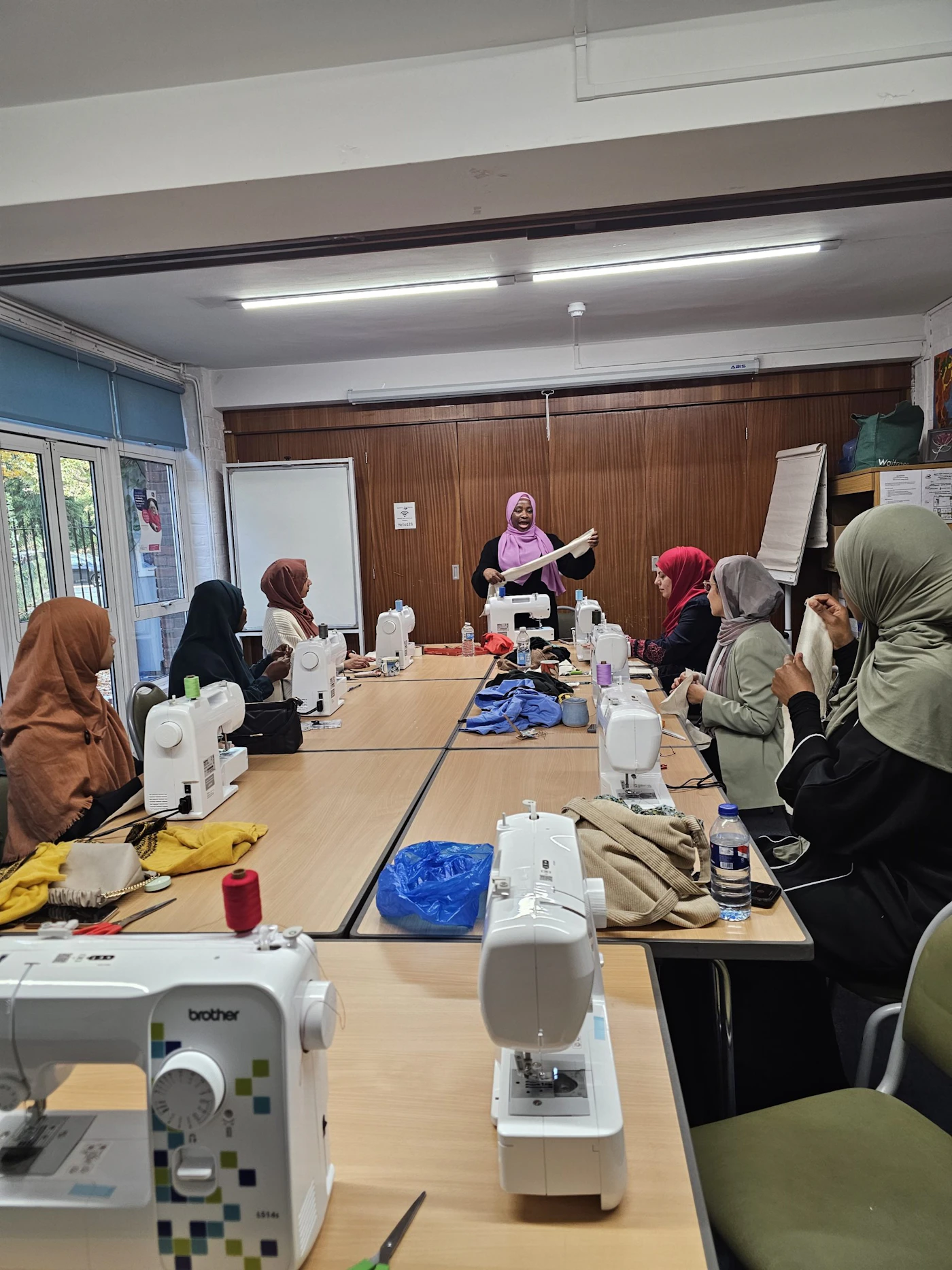
Let me tell you something that rarely gets said out loud. When I announce a free sewing class for Muslim women, something remarkable happens. They show up. Not a few of them, many of them. They arrive early. They stay late. They bring their sisters, their daughters and their friends. And when they sit down at a sewing machine for the first time, something shifts. The concentration on their faces, the laughter when something goes wrong, the sheer delight when they hold up something they have made with their own hands and cannot quite believe they did it. Sewing does that to people. But for a long time, I asked myself why so many Muslim women were not given the chance to discover it.
After almost a decade of teaching sewing to women across London, I have heard things that have stayed with me. Things that tell me the joy is real, the hunger for it is real, and the barriers standing in its way are just as real.
The Financial Barrier Nobody Wants to Talk About
Sewing is one of the most joyful, meditative and creatively satisfying things a person can do.
Ask anyone who has ever finished a garment they made themselves. And yet for many Muslim women, it remains just out of reach. We aren’t always lucky enough to access the same opportunities that others take for granted. This is not a comfortable thing to say, but it is true. Within our faith and our culture, there are structures—some protective, some limiting—that shape what a Muslim woman feels she can pursue, where she can go, and what she can spend.
The numbers tell their own story. Research by the University of East London, commissioned by Islamic Relief UK, found that only 28% of Muslim women in the UK are in paid work compared to the national figure of 72%; and more than half live on an absolute low income, over three times the UK-wide rate for women.
In many Muslim households, men are the primary breadwinners. Women are not always encouraged, or sometimes not permitted, to compete freely in the professional world. The result is a financial dependence that quietly closes doors.
A premium sewing class, a creative workshop, a skills course; these feel like luxuries that are not hers to claim. Not because she does not want them. But because she has been conditioned to believe that her wanting is secondary.
That the household budget does not stretch to what might be seen as an extra hobby, that the return on such an investment is uncertain, or simply that her time and money are better directed elsewhere. These are not always imposed beliefs. Sometimes they are survival choices. But the effect is the same; the door quietly closes before she ever reaches for the handle.
“This class is so rich. Even if I was told to pay, I think it is worth it.” — Maryam, a student at one of my free sessions
“If only I could afford it, I would be a regular student of yours, as I have never been introduced to dressmaking in this way before.” — Khadeejah, another student who benefited from one of the free sewing workshops.
These are some of the comments I have heard over the years. They stopped me in my tracks every time. Not because of the compliment, but because of what they revealed. The joy was always there, waiting. The free ticket was simply the key that unlocked the door.
The Space Problem: When the Room Was Not Built for You
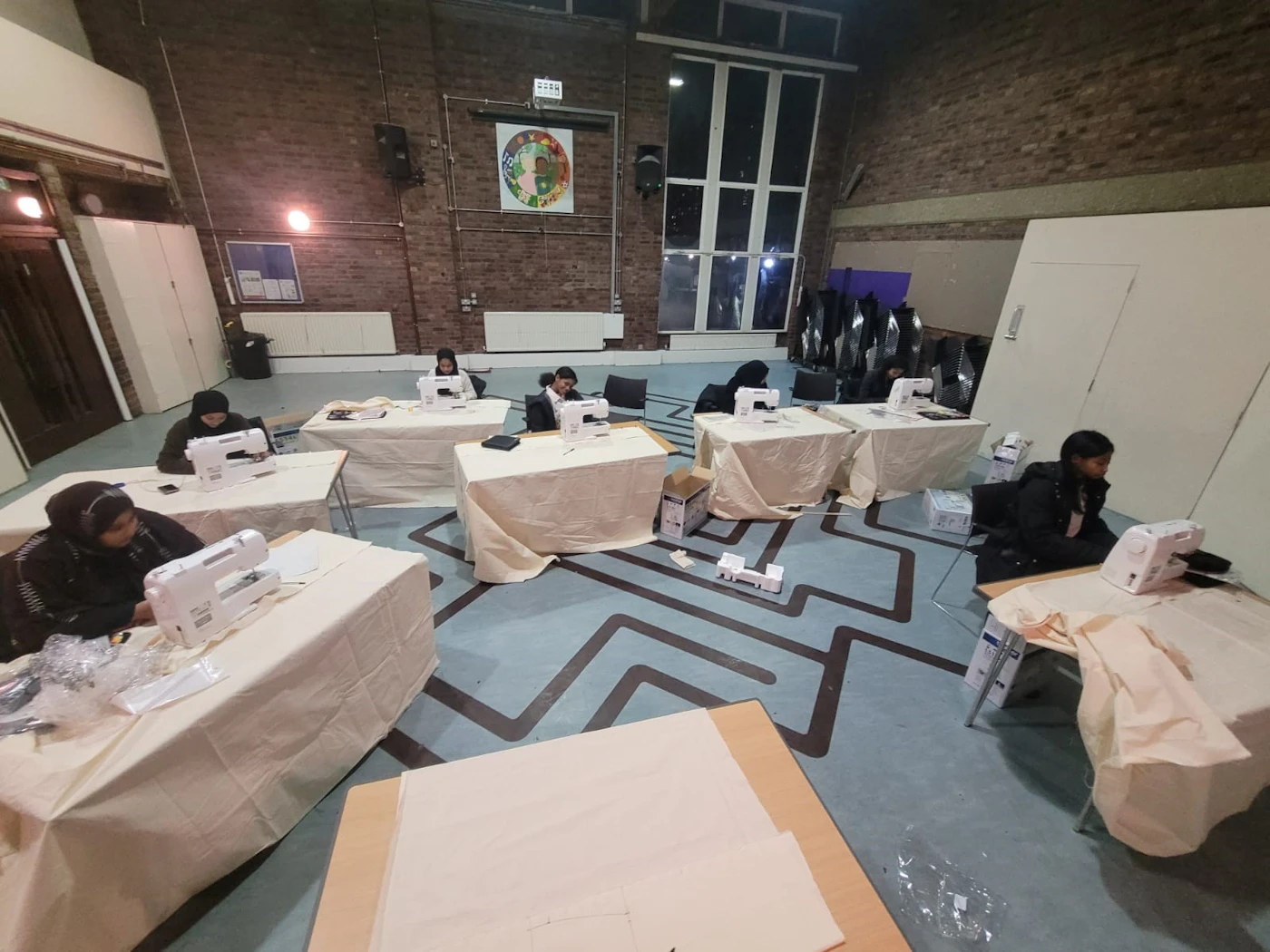
Money is only one part of the barrier. The other is the space itself. For sewing to be truly joyful, the environment has to feel safe. Muslim women want to learn in spaces where they will not be judged for their faith choices. Where they can talk openly about what they can and cannot do without embarrassment. Where wanting to work only alongside other women, or needing to step away to pray, or choosing not to shake hands with a male instructor, does not make them feel like they are being difficult.
These are not unreasonable requests. They are basic needs. And most mainstream creative education spaces are simply not designed with them in mind. The result is that many Muslim women opt out entirely.
Not because they do not want to learn. But because the cost of being visibly Muslim in the wrong space is sometimes higher than they are willing to pay.
These are not my words. They are the words of Muslim sisters I have taught over the years. Phrases that have stayed with me long after the machines were packed away and the rooms emptied:
“Sis, is the class going to be only for Muslim women? What kind of students would be in attendance?
“As a Muslim woman, I have always wanted to learn to sew but was always scared of what was available out there.”
“I was scared of losing my deen to conform to a space not made for people like me.”
“I cannot believe someone finally thought of us; someone who looks just like me.”
“You make it look so easy, and I finally feel like I belong in this space.”
Every single one of these came from a different woman. And every single one of them tells you the same thing: when the right space exists, Muslim women do not just attend. They thrive, the laughter gets louder, their creativity opens up, the sewing gets better, and they come back.
The Modest Fashion Problem: When Your Wardrobe Is Out of Reach
There is another dimension to this that does not get discussed enough. The global modest clothing market is worth nearly $100 billion and is projected to nearly double by 2033; and yet, for many Muslim women, the garments that make up that market remain out of reach. Modest fashion (the abayas, the long dresses, the layered pieces that reflect both style and faith) is expensive. The designers who truly understand modest dressing charge accordingly, and rightly so.
But for a Muslim woman who cannot easily afford premium modest fashion, learning to sew is not a hobby. It is a form of liberation.
It means she can make the garment she has been looking for but cannot find on the high street. The abaya that fits her perfectly. The modest occasion dress that no boutique stocks in her size. The everyday pieces that are hers from the first cut of fabric to the last pressed seam. There is a particular kind of joy in that. In putting on something and knowing every decision about it was yours. Yes, SHEIN has democratised fashion, and credit where it is due. But anyone who knows vintage knows SHEIN is cementing a falling wall, not building a new one. The dress that looked ethereal on the model arrives and tells a very different story. What looked like design was editing. What felt like fashion was an illusion. It rarely survives the first wear, let alone a second wash. Learning to sew gives you something SHEIN never can; a garment made on your own terms, that fits your body, reflects your values, and brings you genuine joy every time you wear it. Sewing is not just a skill. It is access to something that has always been hers by right but has been kept just out of reach.
For a Muslim woman who cannot afford premium modest fashion, learning to sew is not a hobby. It is a form of liberation.

The Mentorship Gap: When Nobody Tells You That You Can
And then there is the quietest barrier of all: the absence of Muslim women in creative and fashion spaces who are visible, who are thriving, and who reach back to bring others with them. Every woman who has ever fallen in love with sewing remembers the person who first put a needle in her hand. Muslim women are not always told that fashion design, textile arts, and garment construction are legitimate, financially viable paths.
Without role models in those spaces, the girl who might have discovered her greatest creative passion instead assumes that this world is not for her.
Not because she was told no. But because nobody ever told her yes.
If I had met you as a teacher years back when I was learning, I certainly would have mastered sewing by now. — Puran, my first student on SuperProf.
That one stayed with me. Because it was not just about sewing. It was about finding joy late. And I think about all the women for whom it might not arrive at all if things do not change.
What I Am Doing: One Sewing Class At A Time
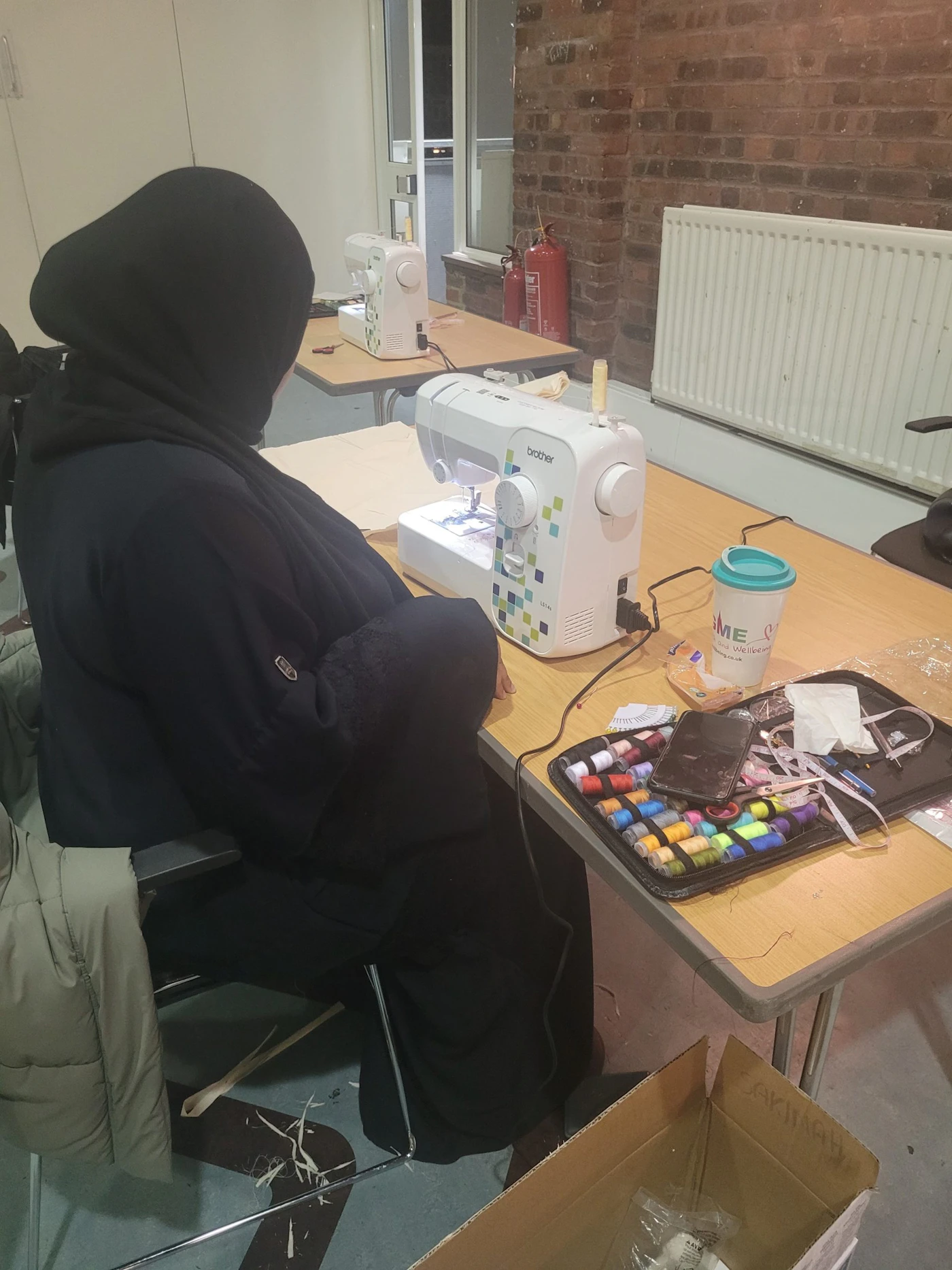
Through my sewing initiative, I make it a deliberate practice to partner with community organisations to offer free sewing sessions specifically within Muslim communities. Not because free is always better; my work also includes premium classes and professional tuition, but because free removes the first barrier and lets the creativity in.
It says: this is for you. You do not need to ask permission, justify the expense, or wonder whether you deserve it. You just need to come.
I have delivered free programmes through Beyond the Bias CIC in Canary Wharf, through Ayesha Youth Project in Newham, and through independently organised sessions at community spaces across London. Most recently, my initiative has been invited to deliver free taster workshops as part of the official summer programme across two Council youth centres, and is in the process of being formally registered as an approved supplier to one of the London Boroughs. Each time, the response has confirmed what I already knew: the appetite is there. It has always been there. What was missing was the invitation.
What Our Community Can Do
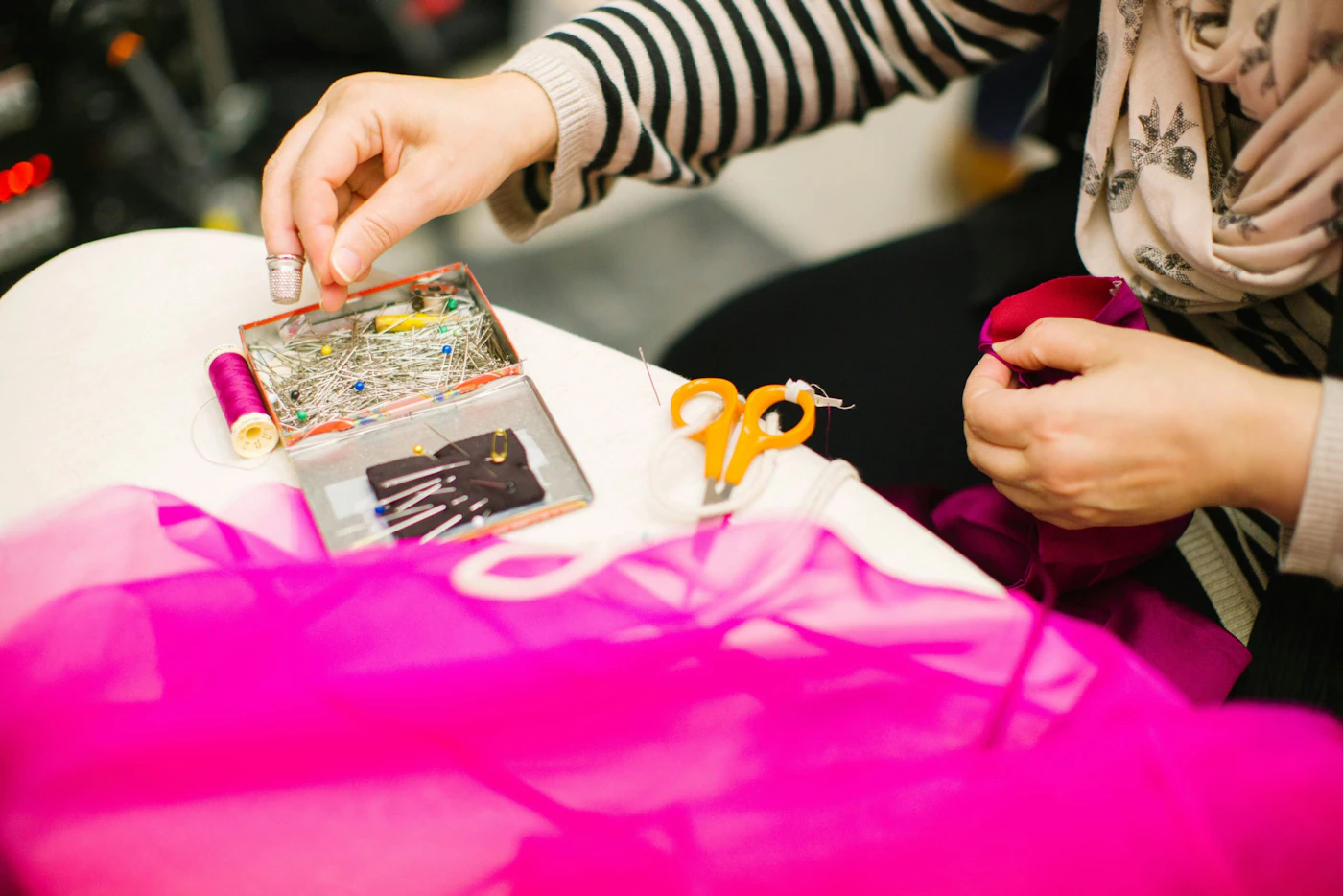
I am not writing this to be heavy. I am writing this because sewing is genuinely one of life’s great joys, and too many Muslim women have been quietly kept from it. The thrill of choosing a fabric. The meditative focus of cutting and pinning. The satisfaction of a perfectly sewn seam. The pride of wearing something you made yourself. Our community has a role to play in making sure more of our sisters get to experience that. Subsidised skills programmes, free creative workshops, mentorship from Muslim women who have walked the path; safe, private, faith-affirming spaces where the pleasure of making can happen without apology. These are not impossible things. They are choices. And every time a Muslim woman gains a skill, she gains something that ripples outward; into her household, her children, her community.
‘Capability without access is a gift that goes unwrapped.’
The next time you see a free sewing class advertised in your community, or any free creative skills session aimed at Muslim women, share it. Tag someone. Bring someone. Because behind every woman who shows up is a woman who almost did not. And behind her is a joy she almost never got to feel.
Free skills. Full hearts. That is what our sisters deserve. One stitch at a time.
Find a Free Sewing Class Near You
If you are a Muslim woman in London looking for a free or affordable sewing class, or if you are an organisation interested in bringing this work to your community, get in touch at sew.madame@gmail.com.

Raheemat Olukoya
Raheemat Olukoya is an Engineer, Dressmaker, and Founder of Sew-Madame, a sewing initiative offering classes to young people and communities across London. She has over 14 years of professional experience in fashion design and garment construction, including almost a decade teaching sewing to women across London, having worked on pieces worn at the Cannes Film Festival and New York Fashion Week, as well as pieces sold through BHLDN by Anthropologie (USA). Through Sew-Madame, she delivers sewing programmes in partnership with community organisations across London, with a particular focus on creating welcoming, hijab-friendly spaces for Muslim women and girls.
