


Brexit is a topical word, we talk about it when we talk about Trump and the rise of the Alt-Right, but what does it mean, where did it come from and does it affect us? In this article, we wanted to explore what certain jargony type words mean, how it all started and where it is all going. What does being part of the EU mean? Essentially being a part of the EU means that all 28 members/countries follow the same rules and regulations when it comes to the movement of people, goods services and capitals. All member states are part of a single market which aims to make it as easy for London to trade with Copenhagen as it is to trade with Cardiff. Being part of the EU removes barriers in trade and travel and unifies national rules at an EU level.
Why decide to leave in the first place?
The issue of the UK being a part of the EU was the source of a rift in the Conservative party. In the 2015 general election, David Cameron decided that if the Conservatives won, there would be a referendum that would allow the UK to choose whether to leave or stay. He did this assuming that the public would vote remain and rift would be resolved. However, on the 23rd of June 2016, the UK voted to leave the EU with a majority of 52%. We are scheduled to leave the EU at 11 pm on the 29th
Of March 2019. The UK has two years (6 months now) to agree with the EU in what a British Exit will look like. During this period where no one has any clue what is going on, there is a lot of phrases/terminology/jargon thrown around that are a little tricky to get your head around. Here are a few definitions which may make it easy to keep up with this very
messy decision process.
Hard Brexit: This is the idea that the UK severs all ties with the EU, resulting in the UK giving up all their access to the single market, and keeping very few relations with the EU. UK citizens would lose their automatic right to live and work in the EU, and there would be a lot more obstacles to face when trying to trade.
Soft Brexit: This may mean that we stay in the single market and we keep close ties with the EU. Those who wanted to remain in the EU like this version.
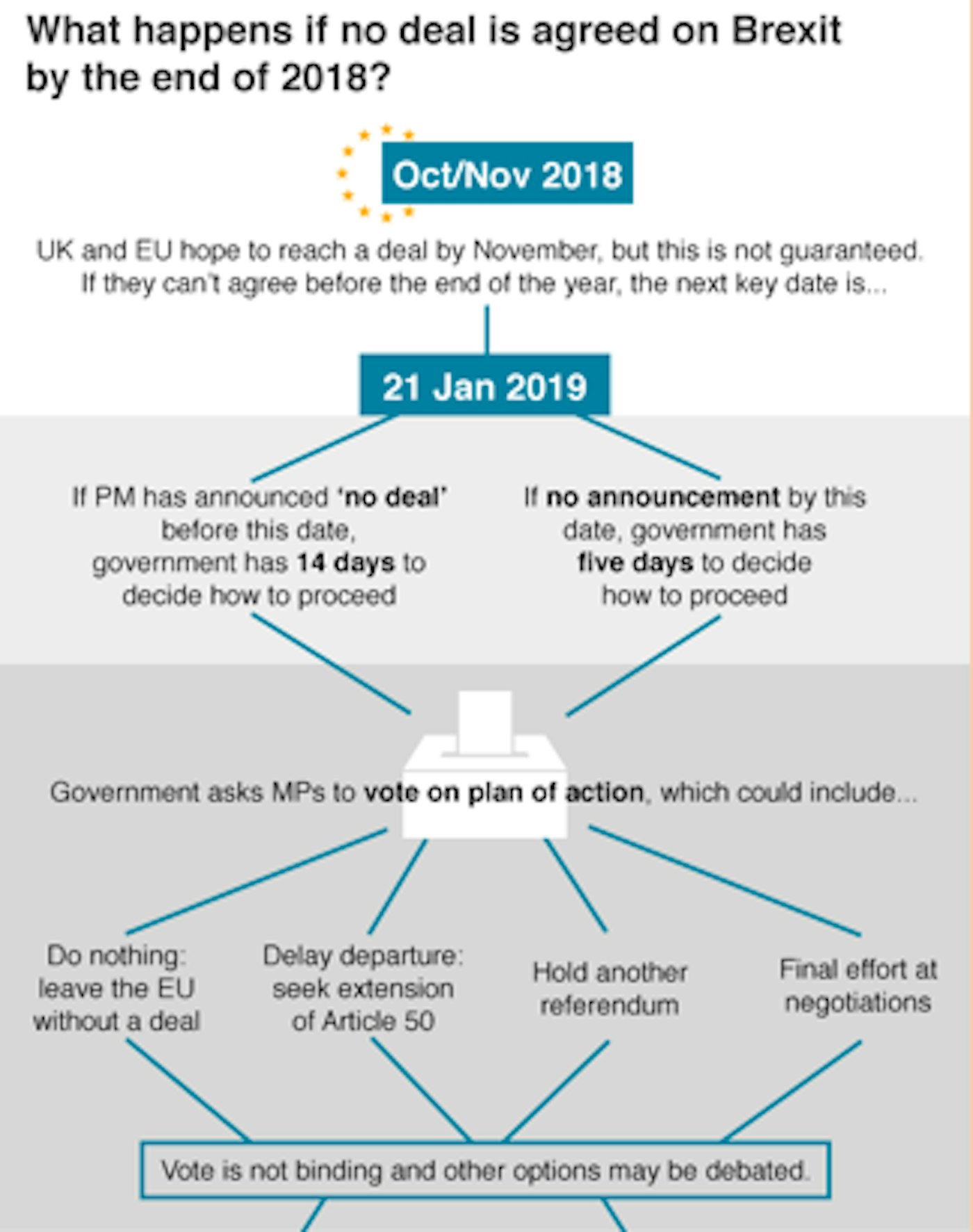
No Deal: No deal Brexit is the case where we leave the EU without coming to any agreements. This would mean that we would have to trade with the EU like it was any other country and the rules of trade would be governed by the world trade organisations and not deals set by the UK government. i.e., the trade agreements would not be in our favour, in comparison to deals that the UK could have negotiated themselves. Legal status of EU citizens in the UK and Brits living abroad would be questionable. Those who are in favour of no deal argue that it would make the UK more independent. Those who are against it, say that it would result in chaos at borders + chaos in food prices + chaos in business and chaos in travel.
The Pound
The value of the pound decreased after the UK voted to leave the EU, and the cost continues to be under pressure as agreements conclude. Jeremy Hunt, UK foreign secretary, has stated that a no deal Brexit could lead to a dramatic fall in the value of the pound. Although we are currently in a weak position, it is difficult to anticipate what impacts, positive or negative, leaving the EU will have on our currency. The following links have beneficial information for those who want to read a little further on this issue.
As agreements are still being made its difficult to anticipate how Brexit will affect our travel plans. However, the UK gov have posted this information on their website: Most countries in the EU (not the United Kingdom) are members of the Schengen Agreement. As it stands, British citizens and EU nationals are able to enter the Schengen area ( Austria, Belgium, the Czech Republic, Denmark, Estonia, Finland, France, Germany, Greece, Hungary, Iceland, Italy, Latvia, Liechtenstein, Lithuania, Luxembourg, Malta, the Netherlands, Norway, Poland, Portugal, Slovakia, Slovenia, Spain, Sweden and Switzerland.) with a valid passport. If we leave the EU with no deal, then anyone planning to travel to any of these countries will have to ensure their passport has an issue date on or after 1/10/2009. More information here.
Human Rights laws
On the 26th June 2018, the EU withdrawal act became law. Amnesty International UK, stated on their website that the passing of this bill was a ‘bleak day for human rights.’ “The Government’s original EU Withdrawal Bill proposed three significant changes which would reduce or threaten rights and protections for people in the UK after withdrawal:
- The Bill fails to retain the EU Charter of Fundamental Rights in domestic law, weakening the protections currently available to people in the UK.
- The Bill also gets rid of the right for people to bring a case founded on the EU “general principles,” which include protections such as the right to equality.
- The Bill hands sweeping powers to Ministers to widely alter legislation without appropriate parliamentary scrutiny, placing current rights and equality laws at risk. This means that a handful of ministers hold power to change incredibly essential laws such as the Equality Act, the Modern Slavery Act, and the Data Protection Act without any proper parliamentary deliberation.
What now?
Well, if you type in Brexit, ‘what now?’ Into google, you find the following headlines :
- ‘British writer urges May to walk away from EU now.’
- ‘May’s lack of clarity on Brexit is now embarrassing Britain’
- ‘Brexit LIVE – Whitehall starts secret contingency plans.’


Sabrina Begum
Sabrina begum is a London based Human Rights Activist and currently holds a position in Amnesty international.
