
Boredom as a Privilege: The Lost Art of Doing Nothing
by Mehek Ali in Culture & Lifestyle on 19th February, 2026

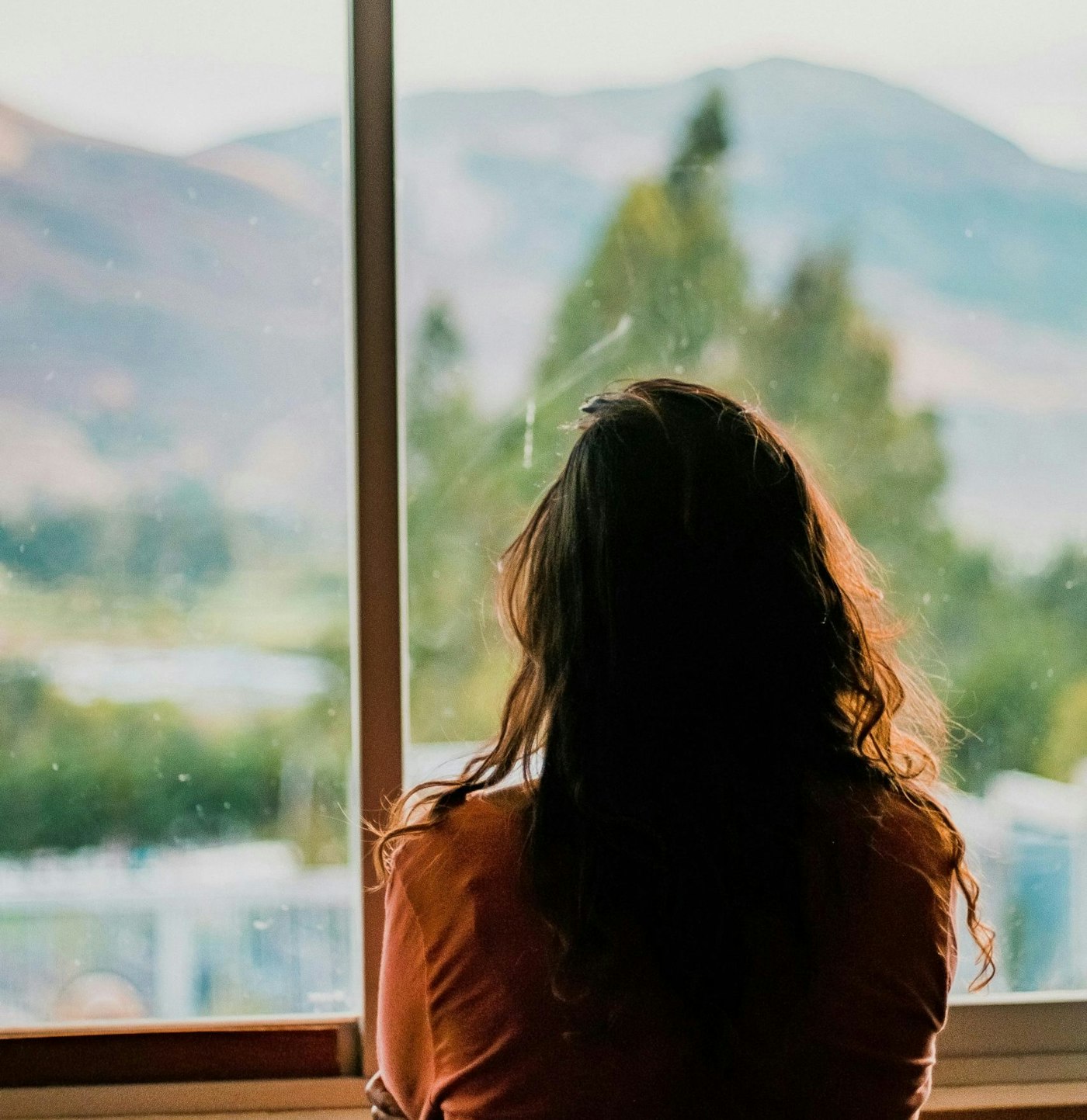
When was the last time you felt truly bored? Scratch that, when was the last time you let yourself feel and relish in boredom? Often perceived as the ultimate villain to any productive endeavour and feared by hustlefluncers, the state of boredom has come to be regarded as nothing other than a vessel for doomscrolling. In other words, boredom is the antithesis of productivity and is therefore invaluable. The philosophy of boredom has been flattened into a problem to solve, rather than a state of being. But what if boredom isn’t a problem, and instead is actually a quiet privilege we often overlook?
I remember becoming fascinated with this idea of boredom as a privilege when I came across a Reddit thread a few years ago. The user went on to discuss boredom as a state he found himself constantly yearning for, particularly focusing on how his current life was filled with nothing but hospital rooms, waiting rooms and dread following his son receiving a cancer diagnosis. What haunted him wasn’t the loss of excitement or ambition; it was the absence of nothingness. He longed for the mundane. I remember being astonished that boredom served as the emotion, or, I guess, state of mind, he missed the most. But, at the same time, it made so much sense; sometimes, nothing happening is a good thing.
It also made me reframe the idea that the antithesis of sadness isn’t necessarily happiness; being happy constantly is also unsustainable. Perhaps what I was longing for was to be bored. That thread pulled me into a wider line of thinking: why do we fear remaining idle, who gets afforded the right to be bored and how we can reclaim boredom’s place in our lives.
Is Boredom a Modern Privilege?
What is boredom? I want to clarify the difference between the boredom I’m referring to here and the feeling of being stagnant. Being momentarily bored is different from feeling stuck or stagnant. Nor am I referring to chronic boredom.
Now, all of us, to some degree, have fleeting moments of doing nothing. But in these modern times, those rare snippets of quiet are automatically filled – usually by getting sucked into the vortex of doomscrolling on socials or maybe a mind-numbing game with no real purpose other than to fill our time. In other words, we reach for just about anything to avoid friction inside our own minds. All the while, true boredom – real, unstructured time and space to do nothing and face no consequences – has become a privilege only afforded to a select few.
To be bored means your basic needs are met. You are not in survival mode; there is no immediate crisis demanding your attention. No labour that you are procrastinating from; no tasks sitting unfulfilled; no looming instability. It is, in many ways, a very overlooked and silent form of luxury. Let’s look at it in the context of (albeit disputed) Maslow’s Hierarchy. Boredom only becomes possible once essentials are secured.
You cannot be bored when you are hungry, you cannot luxuriate in stillness when you are unsafe. You do not get the benefit of staring at ceilings when your mind is trying to solve how to make it through tomorrow. Real boredom only reveals itself when the nervous system is allowed to uncoil.
Despite boredom being a sought-after state and a sign of genuine luxury, our societal perception of the act of doing nothing centres around figuring out ways we can eradicate it rather than opportunities to cultivate it. To fill everything with more and more, a never-ending hustle, a constant stream of dopamine, and endless consumption. Anything but nothing.
Why We’re Addicted to Being “Productive’’
Without a shadow of doubt, the cult of hustle culture, the persona of “That Girl” and the new wave of ‘locking in’ all work to reinforce one key philosophy – you must constantly be productive. You must constantly be doing something. To stand still is to be inefficient. Busyness has become a commodity, the very point of life itself. It’s become the key goal of influencers and self-help gurus who focus on selling you the art of how to monetise all your free time, turning your entire life into a product for consumption.
They all push the same mantra: you must be optimising, you must be maximising. To stand still is to be lazy, to pause is to fall behind, and stillness becomes synonymous with inefficiency.
This idea is perpetuated even further by a new strain of so-called ’productivity influencers’ whose entire platforms present human existence as a checklist of goals to be met as efficiently as possible. Taking time to actually be present in the moment is tantamount to failure if nothing tangible comes from it.
Now, don’t get me wrong, sometimes we need that extra support to get our affairs in order. Be it school, work or a big deadline. Not all productivity is evil. However, not every single aspect of our mental real estate at every given time should be up for grabs. For many, busyness is no longer something we do; it’s who we are. ‘’I’m so busy’’ becomes a genuine badge of honour, or proof that what we do – and by extension we – matter.
The quieter your life is perceived, the more suspicion it attracts and a life that produces nothing of monetary value is perceived as devoid of purpose.
Chasing Everything Makes Us See Less
No conversation around boredom can be completed without a discussion on the proliferation of short-form content and our subsequent eroding attention spans. We live in a world where our brain is rarely allowed to power down; we are constantly consuming, and that is an intentional shift. Moments where we have a second to think become plagued by the collective stim of scrolling on our phones and watching videos we’re guilty of not even finishing (I mean, seriously, the optimum time for a video is 15-45 seconds!). We’ve evolved into a society that is afraid of silence. Compare this to a world where it was commonplace to patiently wait a week for your favourite YouTuber to drop a new video, and now we’re incapable of watching a 2-minute video without it being on 2x speed or with someone playing Subway Surfers in the background.
This indicates so much more than our attention spans eroding; it showcases the perception that we need to be doing multiple things very quickly in order to feel productive. In other words, we’re overloading our brains so much and prioritising digital over-consumption instead of meaningfully engaging with what we’re watching. It’s a lose-lose situation, including for creatives who must now relegate anything they create to clickbait titles and 90-second reels, just to ensure they don’t lose your attention.
Interestingly, this level of doomscrolling is often labelled as boredom, but I would argue the opposite. We’re redefining it to go beyond its more altruistic state and tainting it with more ways to feel overstimulated without bearing the fruits of our brain power. We’re consuming and moving on. To draw parallels outside the digital realm, the outcome of the project almost feels anti-climactic. How often do we finish things and think to ourselves, “Right, what’s next?’’
It’s the paradox at the heart of modern life: the more we chase, the less we actually experience. We move through days in a constant state of anticipation, always oriented towards the next thing, goal, or milestone. Constantly expecting stimulation, entertainment and fodder to fill the silence.
Through that, life becomes a sequence of arrivals; we never stay long enough to inhabit. We stop noticing the way sunlight fractures through windows, the sound of the wind rustling through the trees, the texture of ordinary moments. In the most ironic turn of events, we end up at square one – feeling absolutely nothing whilst busying ourselves with things designed to keep that nothingness away.
Elle Hunt reiterates the lengths we go to avoid boredom at all costs, “The fact that our response to boredom is often destructive, adversarial or otherwise problematic speaks to just how deeply uncomfortable we find the sensation. A 2014 study found that many people chose to administer painful electric shocks to themselves rather than being left alone with their thoughts. One man shocked himself 190 times in 15 minutes.”
What Boredom Actually Gives Us
Boredom gives us the space and freedom we all deserve. Taking it that step further, it plays a fundamental role in helping us achieve our emotional and creative potential. Gayatri Devi describes this phenomenon perfectly:
“Boredom is not a problem to be solved. It’s the last privilege of a free mind.”
They go on to explore:
“Lean in to boredom, into that intense experience of time untouched by beauty, pleasure, comfort and all other temporal salubrious sensations. Observe it, how your mind responds to boredom, what you feel and think when you get bored. This form of metathinking can help you overcome your boredom and learn about yourself and the world in the process.
Don’t replace boredom with work or fun or habits. Don’t pull out a screen at every idle moment. Boredom is the last privilege of a free mind. The currency with which you barter with folks who will sell you their “habit,” “fun” or “work” is your clear right to practice judgment, discernment and taste. In other words, always trust when boredom speaks to you. Instead of avoiding it, heed its messages, because they’ll keep you true to yourself.”
That line, ‘trust when boredom speaks to you’, sits with me often. What am I trying to hide, or keep my mind from wandering towards? Perhaps a part of me fears there’s nothing there, or what sits is uncomfortable. But, as Devi explores, boredom is a signal. There is value in letting it exist, a few moments of mental stillness where our thoughts aren’t shaped by algorithms, which can build a stronger sense of self-trust over time.
Emotionally, it allows us to confront whirling thoughts that eventually boil to the surface, to acknowledge them before they make themselves known in more nefarious ways. It slows us down enough to notice how we’re actually feeling. Creatively, the art of boredom allows us to let our minds run wild, free of externally curated stimuli. Without constant input, the brain starts making its own connections.
This is why so many ideas arrive at us in the shower or on long walks, and my personal favourite, just staring at the ceiling. It’s not because we’re trying to be creative, it’s because we’ve not tried to be anything at all.
How To Invite Boredom Back In (Without Romanticising It)
Boredom and allowing ourselves to enter the state of being bored is a recognition that you are worth more than your productivity, or better yet, it is a form of productivity – just not in the soul-sucking capitalist way or the way that makes us feel valid within society’s constructs.
Inviting boredom is as simple and as unglamorous as sitting in a room without reaching for your phone or taking a short walk without headphones. It’s about not rushing to fill the silence or pauses within your daily routine. If you want to try something a little harder, I’d suggest the art of doing absolutely nothing on a flight (which I, without any concrete research, attribute to repairing my attention span ever so slightly). The point is refraining from avoiding this space, and simply reminding yourself that your mind doesn’t need constant stimulation to be safe. Over time, inviting boredom builds tolerance for stillness, and stillness builds a more honest relationship with ourselves.
Despite all this, though, the undeniable truth is that sometimes the honest answer is that space and silence can be mundane, underwhelming and even uncomfortable. And that’s okay. More often than not, we aren’t going to find inspiration for poetry etched onto a blank ceiling. We aren’t all going to conjure up the idea for a best-selling novel whilst looking at a brick wall. And sometimes it’s okay to forget staring out a window and opt for a cheeky TikTok scroll instead. Boredom isn’t necessarily something that needs to be manufactured or chosen in every scenario, but perhaps it’s something that we don’t need to ward off at all costs either. It simply needs to be listened to and maybe given permission to linger for a little while.
References

Mehek Ali
Mehek is a Pakistani creative with more opinions than she knows what to do with. She started her journey by creating videos on TikTok, amassing over 80,000 followers. However, her focus is now behind the camera. Mehek also loves the occasional deep dive into cultural commentary.
