

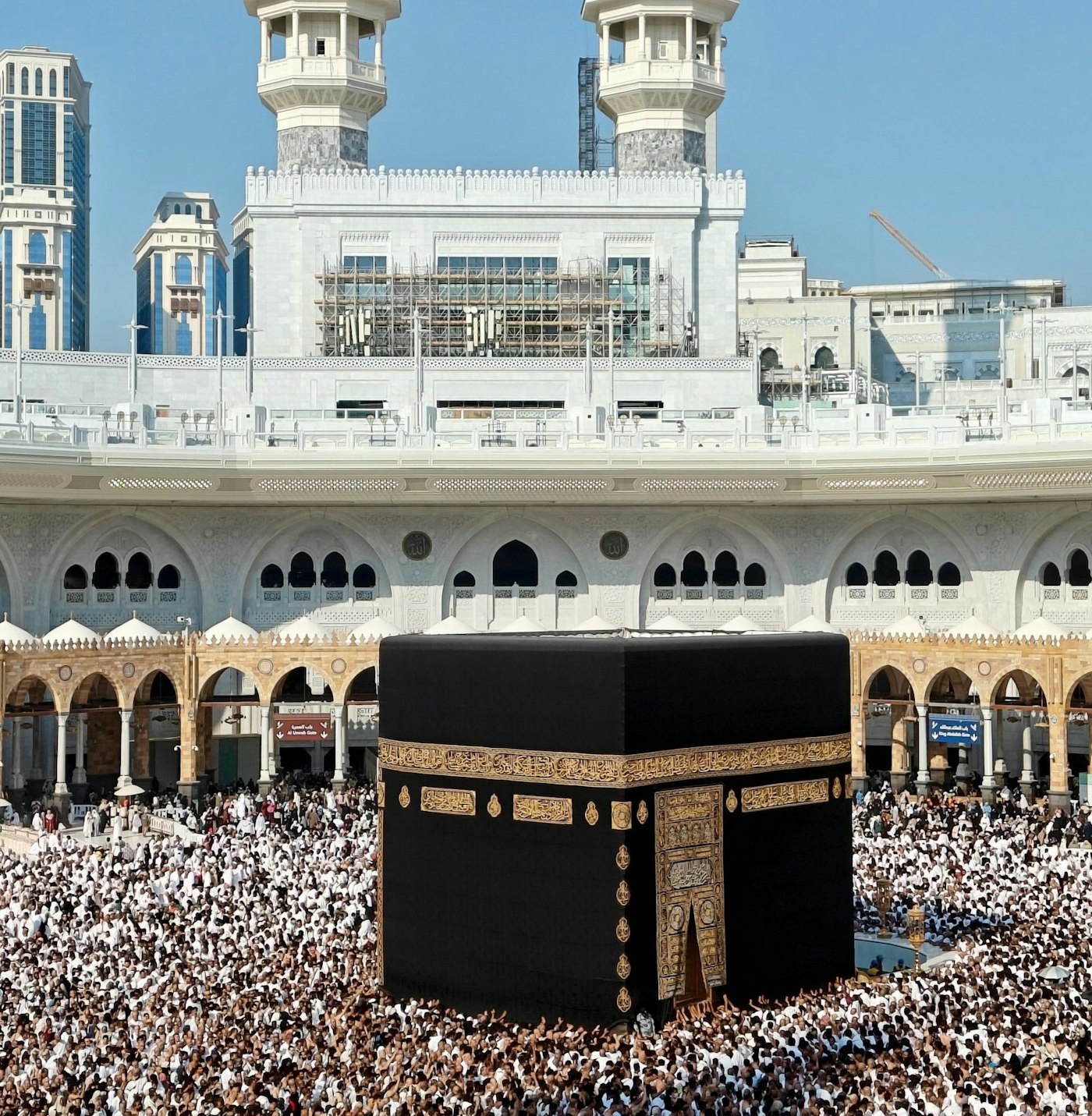
“Mamma, can you believe we are sitting in the exact same place as the Prophet ﷺ?” my six-year-old whispered, as we sat in Masjid-e-Nabwi on a cool October evening last year. I smiled at her, amazed at how instinctively she grasped the enormity of that moment, and of where we were.
That is what Makkah and Madinah do to you. A journey for Umrah or Hajj is not only a spiritual obligation fulfilled; it is a homecoming of the heart, awakening within us a deep connection to our faith and our history. Apart from the Kabah and Masjid-e-Nabwi, there are numerous sites with immense religious significance that one can visit for a deeper understanding of our religion. Standing where pivotal moments in Islamic history unfolded gives you a grounding sense of belonging that no lecture can replicate. The stories feel real. The lessons feel personal. Add to this the many questions my children asked during our visits, and we all came back with a much richer understanding of our Deen than any book or classroom could have taught us.
I would highly recommend arranging your ziyārah (from the Arabic word زِيَارَة meaning ‘visit’) with a local tour guide who is well-versed in the history of all the places you visit. This will enrich the entire journey with even more depth and detail.
Following is a list of places you can add to your visit, depending on the amount of time you have.
Holy sites in Makkah
Cave of Hira/Jabal Al-Nur
This is a cave on the mountain of Jabal al-Nur, where the Prophet ﷺ was visited by Angel Jibreel AS for the very first revelation. The two-hour climb to the cave is a demanding but rewarding one, and we cannot help but wonder how the Prophet ﷺ would sit here for days, meditating in solitude. As a woman, I marvelled at the thought of Ummul Momineen, Khadija RA, making the climb to deliver food to the Prophet ﷺ. She was a staunch pillar of emotional and financial support for him, both in the years before and after Prophethood.
Before the revelation, Khadija RA gave her husband all the space, time and understanding he needed to isolate himself and meditate in the Cave of Hira. She never questioned him and remained his biggest supporter throughout, making the strenuous climb to give him food and water.
One day, Jibreel AS came to the Prophet ﷺ and said, “O Allah’s Messenger! This is Khadijah, coming to you with a dish having meat soup. When she reaches you, greet her on behalf of her Lord (Allah) and on my behalf, and give her glad tidings of a palace made of Qasab in Paradise, wherein there will be neither any noise nor any toil.” (Al-Bukhari 7497)
There is a newly developed museum and market area at the base of the mountain called the Hira Cultural District, where you can spend an hour or two. And there’s more good news – a new cable car system is being built to make the site more accessible to visitors who can’t make it all the way to the top.
Jannat ul-Mu’alla
Located almost a kilometre from Masjid Al Haram and currently only open for male visitors, Jannat ul-Mu’alla, also known as Maqbara Maula, houses the tombs of several prominent personalities in Islamic history, including that of Khadjia RA and several of the Prophet ﷺ’s companions and family members. It is often referred to as the ‘Garden of Paradise’ because it is the final resting place for some of Islam’s earliest and most revered believers.
Cave of Thawr
Also known as Ghar Thawr, this cave is where Prophet Muhammad ﷺ hid for three days along with his best friend and the first Caliph, Abu Bakr RA, when being persecuted by the Quraish. The two were protected by a spider web that prevented the enemies from entering, as the web led them to believe that no one had entered the cave for days.
The site also stands as a reminder of the contribution of Asma bint Abu Bakr RA, who risked her life by secretly delivering food and water to her father and the Prophet ﷺ while they hid in the cave. She was given the title Dhat an-Nitaqayn (The Possessor of the Two Belts) as she split her waistband in two to tie the food containers, and stood firm in front of Abu Jahl, who slapped her for not revealing her father’s hiding place. This site offers a reflection of the immense sacrifices of the early believers and the importance of placing the ultimate trust in Allah, even during immense hardship. While hiding, the Prophet ﷺ said to Abu Bakr RA:
“Do not grieve; indeed Allah is with us.” (Surah At-Tawbah 9:40)
The exact site is a one-to-two-hour strenuous climb, but the mountain can be viewed from below for those who may not have the time or energy to do so.
Jabal Ar-Rahmah
Jabal ar-Rahmah, or the Mercy Mount, is a distinguished site located in Arafat, where Adam AS and Hawwa AS were sent down from heaven to the Earth. A white pillar has been put up to show the exact location of their descent, and serves as a potent reminder of Allah ﷻ’s mercy and the beginning of mankind on this planet. It is also close to the place where Prophet Muhammad ﷺ delivered his final Hajj sermon (Masjid Nimra).
Standing here is one of those rare, surreal experiences where you pause and think: this is the very place that marked the beginning of humanity and the completion of the Prophet ﷺ’s mission.
Masjid Nimra
A sight to behold, Masjid Nimra is a beautiful mosque in Wadi Uranah near the plain of Arafat, where Prophet Muhammad ﷺ camped and delivered his historic Farewell Sermon before leading combined Dhuhr and Asr prayers during his final Hajj. During Hajj every year, the Imam delivers the sermon from this mosque, which is broadcast all over the world. The mosque may be closed when you visit on regular days, though, as it opens only for special occasions like Friday prayers and during Hajj season.
If it is closed, you can pray two rakat in the outer courtyard and enjoy a delicious ice cream from a street vendor outside!
Mount Arafat
One of the most important rites of Hajj is performed on the 9th of Dhul-Hijjah, when pilgrims ascend Jabal al-Arafat and stand together to seek forgiveness from Allah. Although it was empty when we visited during our Umrah, just being there was a powerful reminder of Muslims standing in unity and seeking Allah’s Mercy and forgiveness. Arafat is also considered to be the location where mankind will gather on the Day of Judgement in front of Allah, and this thought lingers long afterwards, humbling you and reminding you of our real purpose on Earth.
Muzdalifah
A vast, open plain nestled between Mina and Arafat, Muzdalifah holds a quiet but powerful place in the rites of Hajj. After sunset on the 9th of Dhul-Hijjah, pilgrims arrive here and pray Maghrib and Isha together, combining the prayers as taught by the Prophet ﷺ. They then spend the night beneath the open sky, resting on the earth in humility and reflection. They also gather pebbles from here, which are later used in Mina for the symbolic stoning of the devil.
Mina
Often referred to as the ‘Tent City,’ Mina is a crucial ziyarah site, as this is where the Jamarat pillars are located for the symbolic stoning of the devil during Hajj, known as ‘Ramy al-Jamarat.’ This ritual is performed in remembrance of Prophet Ibrahim AS, who threw stones at Shaytan three times to drive him away when he tried to tempt him to disobey Allah. After this ritual, pilgrims camp for two days, praying and sacrificing animals at the time of Eid al-Adha.
When we visited, my children were wide-eyed at the sheer scale of the tents stretching endlessly across the valley. Standing there allowed them to visualise the rituals of Hajj in a tangible way, helping them understand not just what happens, but why it matters.
Masjid Jinn
This mosque is situated a bit further away from Masjid Haram and has one of the most interesting background stories in Islam. As per Islamic history, this is the site where Jinn came in troops to hear the Quran and swore loyalty to the Prophet ﷺ. Visiting this mosque is a reminder of other spiritual creations of Allah and the universal message of our Deen.
Masjid Aisha
Situated a short drive away from the Kabah, Masjid Aisha is one of the Miqats where pilgrims who wish to perform a second/subsequent Umrah go to put on the ihram. According to Islamic tradition, after the Farewell Hajj with the Prophet ﷺ, Aisha RA wanted to perform an Umrah as she had been unable to do it earlier due to menstruation. The Prophet ﷺ instructed her to go to this mosque, also known as Masjid Taneem, where she adorned ihram and started her Umrah journey. Today, the mosque stands as a testament to her role in Islamic history and the beautiful legacy she left behind for Muslim women.
Holy sites in Madinah
The Rawdah of the Prophet ﷺ
The Prophet ﷺ stated, “Between my house and my pulpit is a Garden of Paradise.” (Bukhari)
This is precisely the location of the Rawdah or Riyad ul-Jannah in Masjid-e-Nabwi. It is a highly sacred area located between the Prophet ﷺ’s home (where he is now buried) and the mimbar from which he ﷺ used to deliver sermons. Understood to be a literal piece of heaven on earth, it is considered to be one of Islam’s holiest sites. Muslims are encouraged to pray nafl here and seek special dua and forgiveness. It is also highly revered because of its proximity to the graves of the Holy Prophet ﷺ, and his ﷺ companions, Abu Bakr RA and Umar RA.
You can book a visit to the Rawdah via the Nusuk app, and make sure you have your list of duas ready so you can make the most of your time at this awe-inspiring location. It really is one of the most mesmerising parts of your visit, as you look around and take in the notion that you are standing where the Prophet ﷺ used to live and pray every day.
Jannat ul-Baqi
Jannat ul-Baqi is one of the oldest and most sacred Islamic cemeteries, located next to Masjid an-Nabawi. This is where many of the Prophet ﷺ’s family members and companions are buried, including his daughter Fatima RA and some of his wives. It serves as a symbol of the sacrifices and importance of these individuals in Islam, and is a way to show our respect to them. While men are allowed inside during specific hours, women have to stand outside and pay their respects from the boundary walls. The graves are simple and unmarked, in line with the Islamic principle of equality in death.
Quba Mosque
When the Prophet ﷺ first arrived in Madinah in 622 AD, he built Masjid-e-Quba, the first ever mosque in Islam. This is where the first Friday prayer was held, led by the Prophet himself ﷺ, where he ﷺ would visit it later to offer prayers every Saturday. It is one of the mosques mentioned in the Holy Quran, and praying 2 rakahs here yields rewards equivalent to performing an Umrah.
Many visitors pray Fajr in Masjid-e-Nabwi, then take a 45-minute stroll through the peaceful streets of Madinah to Masjid Quba for the Ishraq prayer – a wonderful way to start the day!
Masjid Al-Qiblatain
This is also one of the mosques with an extremely interesting history, and one that marked a pivotal moment in Islamic tradition. Originally, Muslims prayed facing Al-Aqsa in Jerusalem, but during one salah, the Prophet ﷺ received the command to turn the qibla towards the Kabah in Makkah.
The Prophet ﷺ shifted his direction mid-prayer, leading his congregation to do the same as Allah fulfilled his Prophet ﷺ’s deepest wish with the following verse:
“Indeed, We see you ˹O Prophet˺ turning your face towards heaven. Now We will make you turn towards a direction ˹of prayer˺ that will please you. So turn your face towards the Sacred Mosque ˹in Makkah˺—wherever you are, turn your faces towards it.” (Surah Al-Baqarah 2:144)
This is why it is known as the mosque with two qiblas. The previous qibla direction is marked inside the mosque and serves as an important reminder of a significant moment in Islam.
Mount Uhud
“Uhud is a mountain that loves us and we love it.” (Sahih al-Bukhari)
I had these words of the Prophet ﷺ echo in my mind as we visited this historical mountain at the site of the Battle of Uhud. There is something striking about its presence: firm and unmoving. Looking at the rugged terrain, it is impossible not to imagine the intensity of that day with the harsh landscape and unwavering courage of Muslims, despite their limited resources.
The site includes several notable locations, including the Cave of Mount Uhud, where the Prophet ﷺ sought refuge after he got injured, and the Martyrs’ Cemetery, the resting place of 70 companions who were martyred during the battle. Fatima RA would visit these graves regularly, especially on Fridays, with a specific focus on the grave of her uncle, Hamza ibn Abdul Muttalib RA, where she would weep and pray in memory of the deceased. Also located near the mountain are Masjid Ainain and Masjid al-Fash, key mosques where the Prophet ﷺ and his followers prayed and rested.
The actual battle site can also be viewed on your visit, which consists of the Archers’ Hill (Jabal al-Rumah), the small hill where the Prophet ﷺ positioned 50 archers to protect the army, and the main battlefield located between the mountain and the Archers’ Hill. Together, these sites stand as a testament to the bravery, resilience and loyalty of the Muslim army.
The Seven Mosques
This is a complex of small historical mosques in Madinah, marking important places related to Ghazwat al-Khandaq (Battle of the Trench). Each mosque is named after the companion who was stationed there during the battle, and collectively they serve as a homage to the bravery and sacrifice of these early Muslims.
Masjid Al-Ghamamah
‘Al-Ghamamah’ means ‘The Cloud,’ and the masjid is so named because the Prophetﷺ led Salatul Istisqa (special prayer for rain) here, and a cloud appeared shortly after. It is a brief walk away from Masjid-e-Nabwi, which is why it’s closed for regular prayers and can only be observed from outside. Even from a distance, standing on this spot is deeply moving. It’s humbling to realise that this is the very place where the Prophet ﷺ prayed, and that his ﷺ prayer was immediately answered, a heartwarming reminder of Allah’s Mercy.
Masjid Al-Jumu’ah
Located approximately 2.5km from Masjid-e-Nabwi, this mosque is where the first Friday prayer was held after the Prophet migrated from Makkah. It makes you think of the humble days of early Islam and the devotion the Muslims of that time had.
Masjid Abu Bakr RA
Situated just 150m from the courtyards of Masjid-e-Nabwi, this mosque is one of the earliest in Islam. The Prophet ﷺ performed Eid prayer on this site, a practice which was later continued by Abu Bakr RA, resulting in the mosque being named after him.
The Garden of Salman Farsi RA
This is a beautiful location in Madinah where the Prophet Muhammad ﷺ rallied the Muslim community to plant 300 date palms to free Salman Farsi RA from the slavery of his Jewish master. The Prophet ﷺ planted some of these with his ﷺ own blessed hands. The garden still contains numerous lush green trees, providing a scenic view and an oasis-like respite in hot summer months.
Beer e Ghars
This well is greatly revered as the Prophet ﷺ drank from it and used it to make Wudhu. It is also known as the ‘Well of Paradise,’ and Muslims believe that the Prophet ﷺ expressed a desire to be bathed with its water after his ﷺ demise. The well has been renovated recently and is covered by a metal grill to protect it.
The House Of Syeda Fatima Bint al-Hussein RA
The residence of the granddaughter of Ali RA and daughter of Imam Hussein RA, this site holds immense historical and religious significance. The house, and the well inside it, were built by Fatima bint Hussein RA herself when she moved from the house of her grandmother, Fatima bint Muhammad RA. The remains of the house allow us to reflect on the life of the Ahlul-Bayt, and the crucial role Bibi Fatima RA played during Karbala and its aftermath. This site often attracts a large number of visitors, so it’s best to visit during the early morning hours, especially in hot summer months.
If you are planning to perform Umrah or Hajj this year, try to add these places to your itinerary. Most of them can be comfortably covered in a day or two, especially with a knowledgeable local guide who can bring each location to life with the stories and historical context behind it. Once you are there in person, you begin to understand that this journey is about so much more than visiting sacred landmarks. It’s about walking in the footsteps of the Prophet ﷺ and his ﷺ loyal companions, feeling the weight of history, and carrying home not just memories, but a deeper connection to your faith and a heart quietly transformed by the journey.

Rabia Abdullah
Rabia is a storyteller and copywriter based in Toronto, Canada. When she's not writing, she's running after her two sassy daughters, and waiting for her Hogwarts letter (which she's convinced has been lost in the mail). More of Rabia's musings can be found on her instagram handle: @brownmomdiary
