
Seeing Ourselves Whole: Why Muslim Children Need Stories That Belong to Them
by Tasneem Abdur-Rashid in Culture & Lifestyle on 12th March, 2026

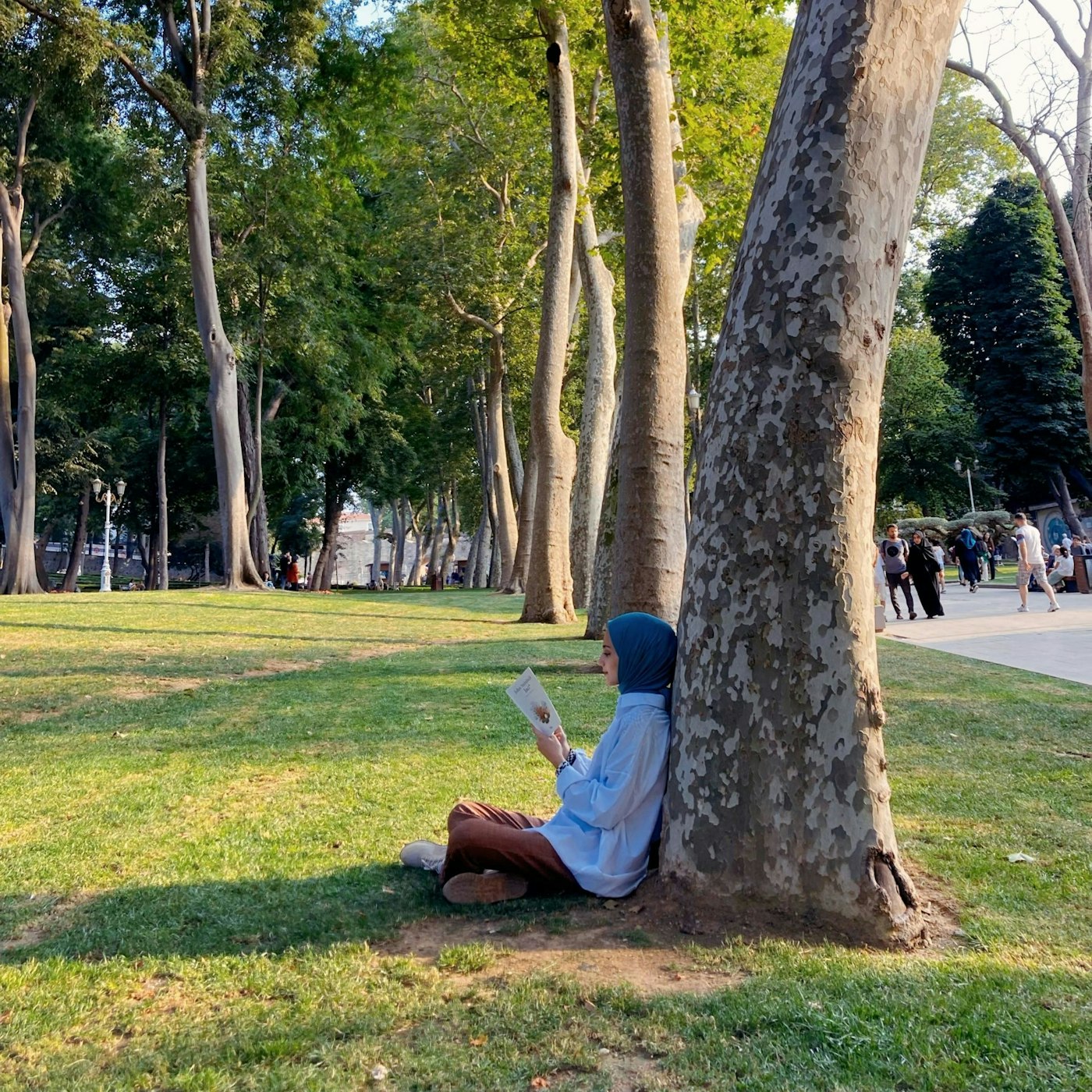
I grew up in north London in a noisy Bengali household where the kitchen was the centre of everything and solitude was a rare and precious commodity. There were always three curries on the stove, a third aunt twice removed on the phone, cousins and siblings running up and down the stairs, and my grandmother calling out instructions that nobody really followed.
Looking back, I see that I had a beautiful, wholesome childhood, but at the time, it felt like carnage. To escape the chaos, I often disappeared into books. And when I did, I entered worlds that bore no resemblance to my own. The girls I met on the page had names I had never heard spoken in my home. They ate different foods, had different problems, and moved through the world with a kind of cultural ease that I instinctively understood was not available to me.
At the time, I didn’t have the language to articulate what was missing. I only knew that I loved books, but books didn’t seem to love me back in quite the same way.
This absence matters more than we sometimes realise.
Childhood is where the architecture of identity begins to take shape, often quietly and invisibly. When children repeatedly encounter stories in which they do not exist, or exist only at the margins, they absorb messages about whose lives are considered worthy of attention.
Conversely, when they are reflected fully – in their families, their faith, their contradictions and complexities – it affirms their place in the world in a way that is both intimate and enduring.
For Muslim children growing up in Britain today, this kind of affirmation feels especially urgent. We’re living in a political climate in which Muslims are at the very least, othered, and more often, demonised. We are frequently spoken about, but far less frequently spoken to. Our lives are debated in abstract terms, reduced to headlines and policy discussions, rather than understood in their ordinary, textured humanity. In this context, children’s literature has the potential to do something quietly radical: to centre Muslim children, not as symbols or explanations, but as autonomous main characters; heroes of their own stories.
For a long time, however, representation within publishing has been filtered through what is commonly referred to as the white gaze. Muslim characters have appeared in narratives shaped by stereotypes, agenda, or a desire to exoticise, rather than reflecting lived experiences. While some of these books have been important and well-intentioned, they haven’t always offered Muslim children the simple, transformative pleasure of recognition without qualification.
What has been particularly interesting in recent years is the way this has begun to shift, especially within children’s and young adult literature. Books such as the Planet Omar series by Zanib Mian have created space for Muslim characters to be funny, mischievous, and entirely themselves, their faith woven naturally into the fabric of their lives rather than positioned as a problem to be solved. Similarly, Love from A to Z by S. K. Ali and Hani and Ishu’s Guide to Fake Dating by Adiba Jaigirdar, explore love, friendship and identity with nuance and emotional depth, allowing Muslim teenagers the same narrative richness that has long been afforded to others.
What distinguishes these stories is not simply the presence of Muslim characters, but the perspective from which they are written.
They are not performing Muslimness for an external audience; they are inhabiting it from within.
As both a writer and a parent, I have seen firsthand the difference this makes. When my own children encounter books with Muslim characters, there is a subtle but unmistakable shift in their engagement. They move through the story with a sense of ease and excitement, recognising themselves in ways that feel both natural and quietly affirming. It’s not that they can’t enjoy books outside their experience – of course they can – but there is a particular kind of belonging that comes from seeing your own world treated as ordinary rather than exceptional.
Writing my own YA novel, Odd Girl Out, was shaped profoundly by this understanding. I wasn’t interested in presenting my protagonist, 15-year-old Maaryah, as an issue or a metaphor. I wanted her to exist as a full person – contradictory, vulnerable, hopeful, questioning – whose faith was part of her life but didn’t define the limits of her story. In doing so, I was writing not only for Muslim readers, but from a place of authenticity and respect that wasn’t available to my teenage self.
The publishing industry has undoubtedly made progress during my career, and there is now greater awareness of the importance of diversity. Yet structural inequalities remain, and Muslim stories still occupy a relatively small portion of the literary landscape. There can be an unspoken pressure to make these stories legible or comfortable for mainstream audiences, which can dilute their specificity. And yet it is precisely that specificity – the details of language, family, ritual, and belonging – that gives them their power.
What gives me hope is the growing number of Muslim writers who are no longer waiting for permission to tell their stories. These trailblazers are writing boldly and unapologetically, expanding the possibilities of what Muslim childhood and adolescence can look like on the page. They are creating worlds in which Muslim children can be heroes and villains, dreamers and rebels, ordinary and extraordinary.
This matters not only for Muslim readers, but for all readers. Literature has always been one of the most powerful tools we have for expanding empathy and understanding – and this is scientifically proven.
When children encounter stories that reflect a wide range of lives, they develop a more expansive sense of the world and their place within it.
But for those children who have waited a long time to see themselves, these stories offer something even more fundamental. They offer recognition and permission. And perhaps most importantly, they offer the assurance that their lives, too, are worthy of being told.
We are at an exciting juncture in Muslim-authored children’s and Young Adult literature. Whether it’s for a child in your life or even for yourself, here are some to look out for.
Children’s Literature
Picture Books (2-4 years)
“Just Right” Ramadan by Jenny Molendyk Divleli, illustrated by Ava Haghighi – a heartwarming story that follows a family’s experiences during Ramadan and teaches kids about finding the right balance in the holy month.
My Dad’s Beard by Zanib Mian – about a little boy’s love and admiration for his father, seen through the playful and affectionate lens of his dad’s beard
The Masjid Kamal Loves by Ashley Franklin and illustrated by Aaliya Jaleel is a fun, rhythmic picture book about a boy named Kamal who loves going to his masjid and spending joyful time with his community.
Everything Grows in Jiddo’s Garden – by Jenan Matari, illustrated by Aya Ghanameh, is a heartwarming picture book about a young Palestinian girl who helps her grandfather (“Jiddo”) tend his garden and learns about home, identity, and her family’s connection to the land they had to leave behind.
Younger Readers (5-8 years)
Eliyas Explains series by Zanib Omar – a brilliant series to help little ones understand our faith, like Eliyas Explains Angels, Eliyas Explains Why Should I Pray My Salah, and Eliyas Explains Ramadan.
Amina Banana series by Shifa Saltagi Safadi – A funny, warm illustrated chapter-book series about a lively young girl navigating family, school, and friendships with a big personality and heart.
Dear Black Child by Rahma Rodaah is a children’s picture book celebrating and affirming the worth, beauty and potential of Black children.
The Amazing Muslim Worlds by Learning Roots – a child-friendly introduction to the expansive geography of Islamic history that covers the most significant Muslim dynasties.
One Home by Hiba Noor Khan and illustrated by Rachael Deen is a non-fiction book that takes you around the world to meet 18 inspiring young activists fighting climate change and shows how children can help protect our planet – our one home.
Anything by Zanib Mian (The Planet Omar Series, The Madrassa Mysteries, and Meet the Maliks)
Anything by Onjali Rauf (The Boy at the Back of the Class, The Night Bus Hero) – both are books that explore heavy but necessary themes, such as refugees and homelessness.
Najma by Anousha Vakani is an award-winning children’s book that invites readers into the magical world of stars. Alongside Najma and her astronomer mama, we take a whimsical journey through the cosmos, learning the life cycle of a twinkling star while reflecting on the greatness and wisdom of Allah. Tenderly exploring both a mother-daughter bond and our relationship with the Creator, the story is brought to life with truly exquisite illustrations.
Ilyas & Duck Series by Omar S. Khwaja (Search for Allah, Fantastic Festival of Eid al Fitr, A Zakat Tale, Ramadan Joy & Spectacular Salah) – These stories are brimming with joy, humorous illustrations, witty dialogues, rhyming words, fast-paced energy and adorable characters. A must for any Muslim child’s bookshelf.
Bismillah Soup by Asmaa Hussein explores Barakah in our actions when we start with Bismillah and pure positive intentions. A spin-off of the classic folktale Stone Soup, Bismillah Soup is about Hasan, a Somali boy, who sees his mother struggling while his dad is out of town. They’re down to their last bag of rice, and Hasan decides to help.
Middle Grade (8-12 years)
The Night I Borrowed Time by Iqbal Hussain is a funny and heartfelt middle-grade time-travel adventure about eleven-year-old Zubair, who discovers a family gift that lets him journey into the past to try to mend his family’s troubles, but learns that changing the past comes with complex consequences.
Escape from the Child Snatchers by Sufiya Ahmed – think family loyalty, courage in the face of colonial power and exploitation, cross-cultural friendship, and questions about whose stories are remembered in history.
The Line They Drew Through Us – a middle-grade historical novel about three best friends whose lives are upended when British colonial rulers partition India in 1947 – and Safiyyah’s War, a historical novel about a young Muslim girl during World War II, both by Hiba Noor Khan.
Silverbrook: Yumna and the Golden Horse by Yassmin Abdel-Magied is a warm and funny mystery novel with community at its heart. It follows thirteen-year-old Yumna, who lives in a sleepy town where nothing happens – until everyone around her starts to develop special powers, and she is seemingly the only one left behind.
Once Upon an Eid is a heartwarming short story collection curated by S. K. Ali and Aisha Saeed that showcases the experience of Eid for Muslims from all walks of life. Whether it’s waking up to the smell of a traditional Eid breakfast or the excitement of meeting with family and friends, this anthology explores the joy found in Eid across the world.
A Place at the Table by Saadia Faruqi and Laura Shovan is a beautiful, uplifting story exploring themes of food, friendship, family and what it means to belong. It follows sixth graders Sara, a Pakistani American, and Elizabeth, a Jewish girl, taking a South Asian cooking class by Sara’s mother. What begins as a chance encounter unlocks a deep connection between two girls whose lives seem entirely different on paper.
When Stars are Scattered by Omar Mohamed and Victoria Jamieson – A National Book Award Finalist, this remarkable graphic novel is about growing up in a refugee camp, based on Omar’s own childhood growing up in the Dadaab refugee camp, after his father was killed and he was separated from his mother in Somalia. He devoted everything to taking care of his younger brother, Hassan, and to pursuing his education. It’s an intimate, important, unforgettable look at the day-to-day life of a refugee, filled with gentle humour, heartbreak and hope.
House of Ibn Kathir Series by S. N. Jalali – a boarding school adventure series filled with imagination, suspense and heartwarming themes of friendship and community that allow teens and tweens to explore the history of Islamic civilisation whilst being immersed in the gripping plot.
Agent Zaiba Investigates by Annabelle Sami follows Zaiba, who is determined to be the world’s greatest detective. This is a fun, exciting and amusing detective series for young lovers of mystery and intrigue.
Rumaysa: A Fairytale and Rumaysa: Ever After by Radiya Hafiza – an enchanting, funny series that offers a modern spin on the classic fairytale, reinforcing that anyone can be a hero.
Young Adult
The Silver Kingdom by Radiya Hafiza – due to be released June 2026 – is a fun, pacy and exciting romantasy set in South Asia.
Heavensent and Hellbent by Sara Jafari – a modern romantasy inspired by Persian and Islamic lore, featuring angels and jinns, coming out summer 2026.
Odd Girl Out by Tasneem Abdur-Rashid – published recently, this Carnegie-nominated coming-of-age story follows 15-year-old Maaryah, who has to move from sunny Dubai to dreary Essex following her parents’ divorce. This title delves into themes of belonging, faith, Islamophobia and family dynamics.
The Ocean Would Paint Me Blue by Zoulfa Katouh is scheduled for release on June 4, 2026. Her debut YA novel, As Long as the Lemon Trees Grow, was a masterpiece in grief and emotion, and her next book is sure to be equally as gut-wrenching.
The Huda F series by Huda Fahmy is a warm and funny graphic novel collection that follows the teenage life of Huda, a visibly Muslim girl growing up in Dearborn, Michigan, as she navigates identity, family, friendship and belonging in high school.
Anything by S.K Ali (Saints and Misfits, Love from Z to Z, Fledgling) – S. K. Ali writes rich and nuanced stories that centre Muslim teens navigating love, faith, identity and belonging.

Tasneem Abdur-Rashid
Tasneem Abdur-Rashid is a British Bengali mother and author from London and the writer of three adult novels. Her Carnegie-nominated YA debut, Odd Girl Out, has been shortlisted for several awards, including the Warwickshire Teen Book Awards, the Redbridge Book Awards, and the Branford Boase Award. The novel has also been selected for the 2026 Read for Empathy Collection. Before publishing her young adult debut, Tasneem wrote two adult novels. Her first rom-com, Finding Mr Perfectly Fine, was published by Bonnier/Zaffre in 2022 as part of a two-book deal. It was followed by The Thirty Before Thirty List, which was longlisted for the 2024 Jhalak Prize for Fiction and the 2025 Diverse Book Awards. Alongside her writing, Tasneem has worked in media, PR, and communications for more than twenty years across the UK and the Middle East. She holds both a BA and an MA in Creative Writing, and is also the co-host of the award-winning podcast Not Another Mum Pod, which aims to amplify voices that are often unheard. Growing up as a visibly Muslim woman in north London, Tasneem rarely saw herself reflected in the books she read. This experience continues to shape her work today. She is passionate about increasing diversity in publishing and writes stories that celebrate underrepresented cultures with nuance and heart, helping ensure that more readers can see themselves reflected in the books they read. You can find Tasneem on Instagram: @tasneemarashid
