
When Power Collides, the Middle Suffers: Iraq and Iran on Film
by Mehek Ali in Culture & Lifestyle on 17th March, 2026

Note: This article was written before the illegal invasion of Iran by Israel and the US on the 28th February. Since then, attacks have intensified, with thousands of innocent Lebanese civilians and Iranians having been killed in air strikes, and over 3.2 million Iranians have been displaced.
Criticism of a government, no matter how strong, does not grant outside powers the right to bomb a country and its cultural sites, kill its people, or force millions from their homes. The United States and Israel do not possess the moral authority to decide that the lives of Iranian or Lebanese civilians are expendable in pursuit of their geopolitical objectives. Nor do they have the right to assassinate the political leadership of a sovereign state. Civilians are not extensions of the state, and they cannot be treated as legitimate targets simply because of where they live. Presenting destructive military campaigns as humanitarian intervention only deepens the injustice, masking violence against ordinary people behind the language of protection and liberation.
The analysis below was written before these events took place and should be read with that context in mind.
Regrettably, just a few months into 2026, it’s already clear that it has neither started off safe nor sound for millions across the world. From Venezuela, where economic collapse, sanctions, and political deadlock have turned ordinary survival into a daily negotiation, to Iran, where citizens are caught between an entrenched government and the ever-present threat of foreign intervention, the people suffering most are rarely those in power or those calling for escalation.
Iranians are caught at a crossroads of brutal state repression and nationwide protests triggered by economic collapse and long-standing grievances, with widespread internet blackouts and mass arrests used to stifle dissent, even as Western governments waffle between condemnations, selective sanctions and have even begun deportations of innocent Iranians through ICE.
They are the ones in the middle, neither loyalists nor revolutionaries, neither architects of policy nor its beneficiaries, but ordinary people forced to absorb the consequences of decisions made far beyond their control.
Within our discourse, though, how often do we truly and meaningfully centre the people that bear the brunt of violence, scarcity and sanctions, be it imperial apologists hiding behind the reworn facade of saving the ‘‘people’’ or the misuse of liberation narratives from governments aiming to subjugate their citizens? How often do we really think beyond bureaucracy and reckon with the reality that it’s ordinary people suffering whilst we engulf ourselves in digital text wars?
This is where cinema proves its particular power, not to dispute, but to bear witness. The President’s Cake (2025) and It Was Just an Accident (2025), two of the past year’s most resonant but grossly under-discussed films, centre lives shaped by political systems beyond their control, revealing how vast structures of power are endured through everyday acts of survival. Two movies, two geographical neighbours (and previous foes turned acquaintances), bound by the same truth: the people in the middle always pay the price.
It was Just an Accident (2025)
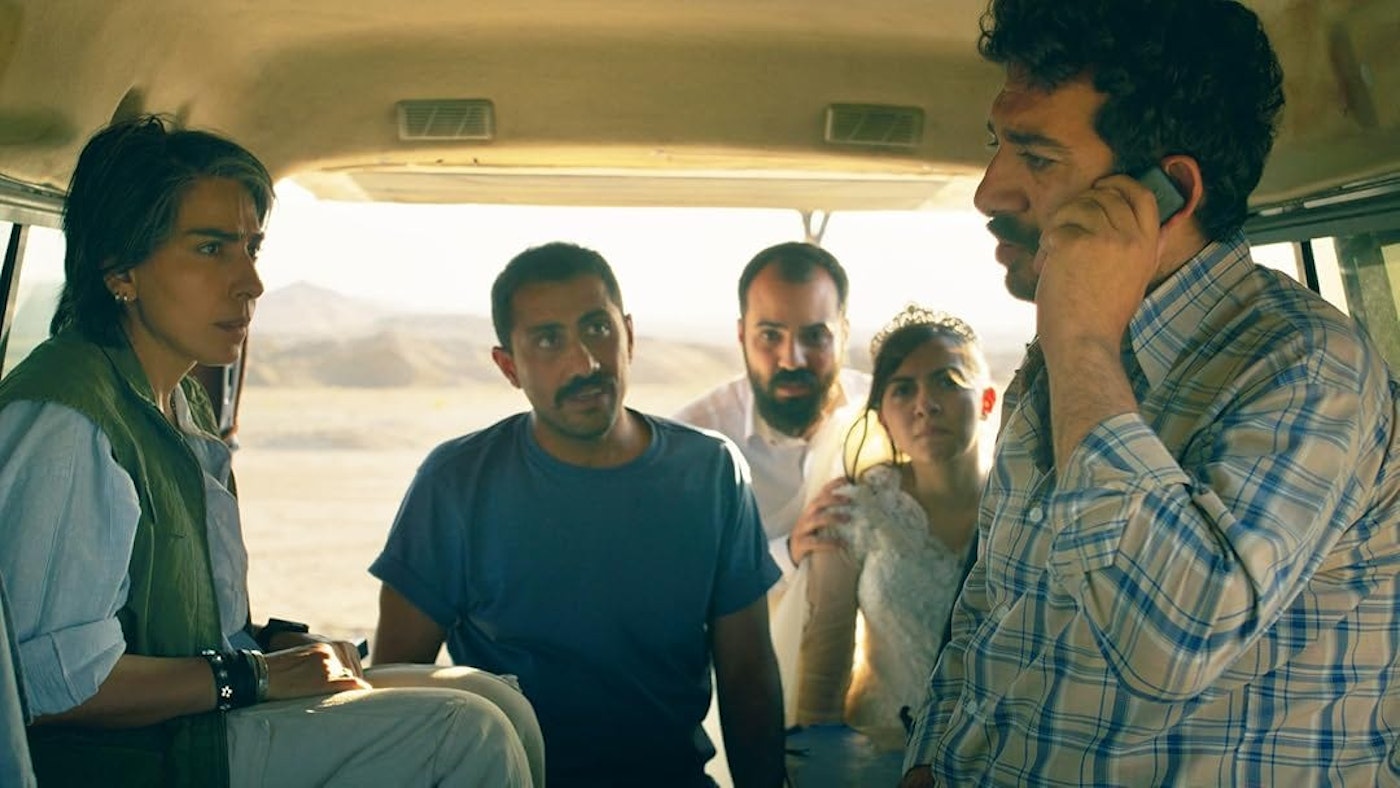
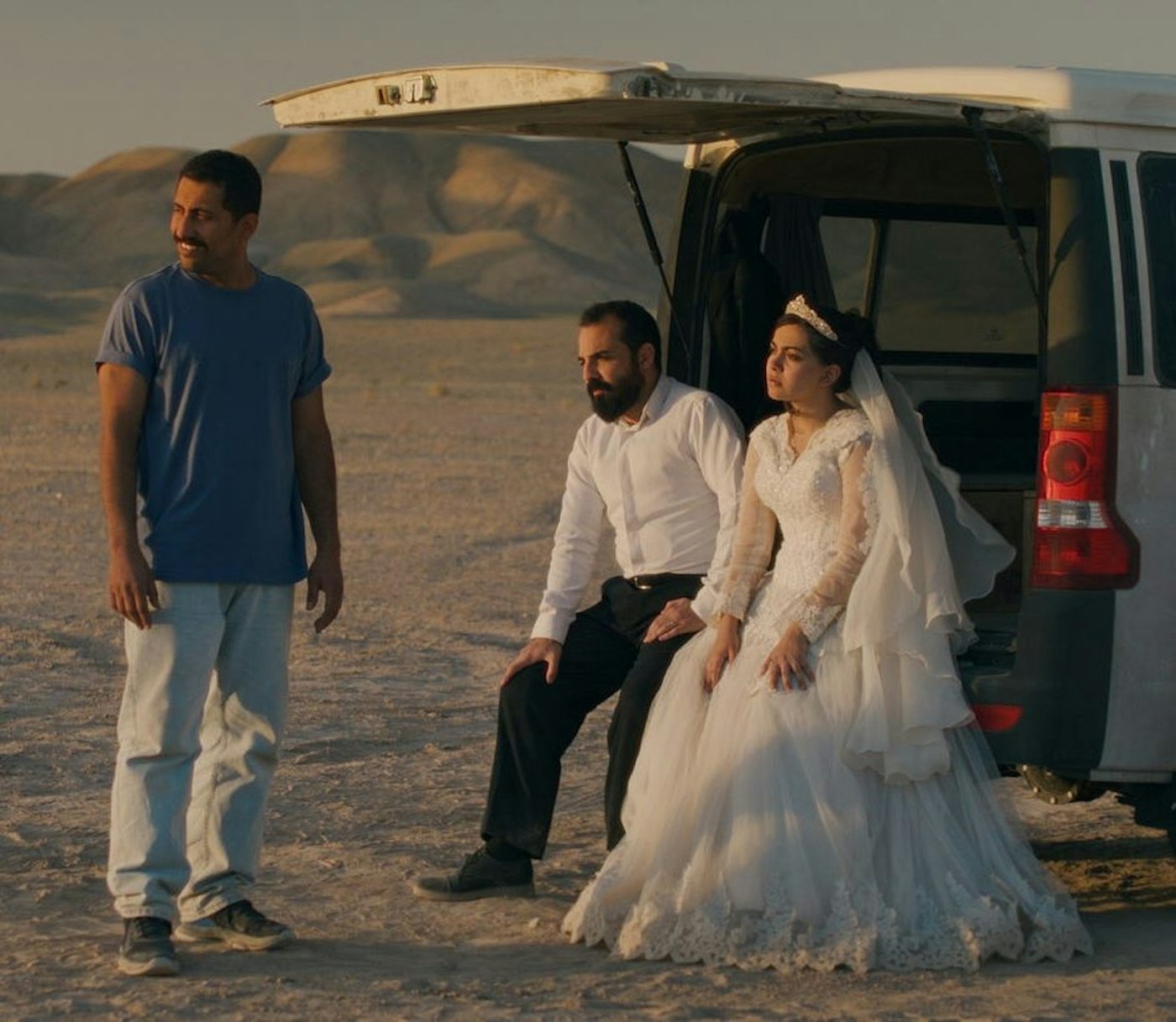
I went to see the Oscar-nominated It was Just an Accident (2025) during the height of the blackout in Iran, and in that moment, the film felt more urgent than ever. The movie follows Vahid (played by Vahid Mobasseri), who kidnaps a man he believes to have detained and tortured him, except he was completely blindfolded and identifies him purely from the tap of his prosthetic leg. What ensues is a tense, meticulous process of piecing together memory, sound, and instinct as Vahid tries to determine whether he has the right man. Alongside him are several other characters who complicate the moral and emotional landscape. Each interaction and conversation is loaded with ambiguity, forcing both Vahid and the audience to confront the uncertainty of memory, the weight of vengeance and the complex interplay between victim and perpetrator. As the story progresses, the focus shifts from finding an objective truth to exploring how trauma shapes perception, how the desire for retribution clashes with survival and how moral choices are rarely straightforward.
Against the backdrop of crushing international sanctions that have choked the economy, cut off vital infrastructure and left ordinary people struggling to survive, the Islamic Republic’s brutal response to dissent has only deepened societal fractures. In this vacuum, alternative movements, such as a Zionist-backed monarchist revival, are attracting attention, despite being led by a genocidal entity claiming to “save” a nation it indiscriminately bombed just last June.
Panahi’s film captures this tension, presenting a story between a state that purports to protect and others claiming to save you; it is the survivors who are left with scars. The narrative is heightened by beautiful cinematography in classic Panahi style, which conveys both the weight of fear and the centuries-old echoes of trauma in everyday life, much drawn from the director’s own experience.
For Jafar Panahi, survival is narrative and telling these stories is paramount, no matter the risk – even if it means filming illegally in Iran and being handed a prison sentence as a result. Despite all of this, Panahi intends to return home after this year’s Oscars circuit closes.
The movie also explores another poignant point: to what degree are agents of the state victims of their own circumstances? To what degree can they deflect blame? One of the most haunting moments of the film for me was the very framing of the movie, where a character hits a stray dog with little remorse. In an attempt to justify the situation to his concerned daughter, he claims the incident is unfortunately God’s will, to which she replies, ‘‘What has God to do with any of this, you killed him.’’
The film forces viewers to consider the interplay between choice and coercion, highlighting how trauma and fear can shape behaviour in ways that defy easy judgment.
What happens when the line between perpetrator and victim blurs, and the audience is left grappling with the uncomfortable truth that moral survival in such systems is rarely straightforward.
Panahi makes it very clear that there is no neat solution except the will of the people and that liberation is deeply personal. Some long to acquiesce and carve out a “normal enough” life, others are driven to taste revolt and revenge – and often, trauma leaves us unable to choose. The ending leaves the audience both hopeful and hopeless at once, striking a profound truth about survival, vengeance and the human cost of power.
The President’s Cake (2025)
A country that knows this conundrum all too well is Iraq. Still felt are the ripples of a country once swept by an authoritarian dictator and a horrific invasion at the hands of the USA. Where political dissent was met with horrifying consequences, and empty calls to save women and children from wolves in sheep’s clothing were cynically wielded to justify the senseless destruction of a nation and the leeching of its oil.
Set in the 1990s during the Gulf War, The President’s Cake (2025) is an exploration of life under extreme poverty, state control redesigned as celebration, and the damage survival has on human connection. It examines the pursuit of hope in a world where dreams and life itself bite the dust, especially when you’re caught in the crossfire of clashing powers.
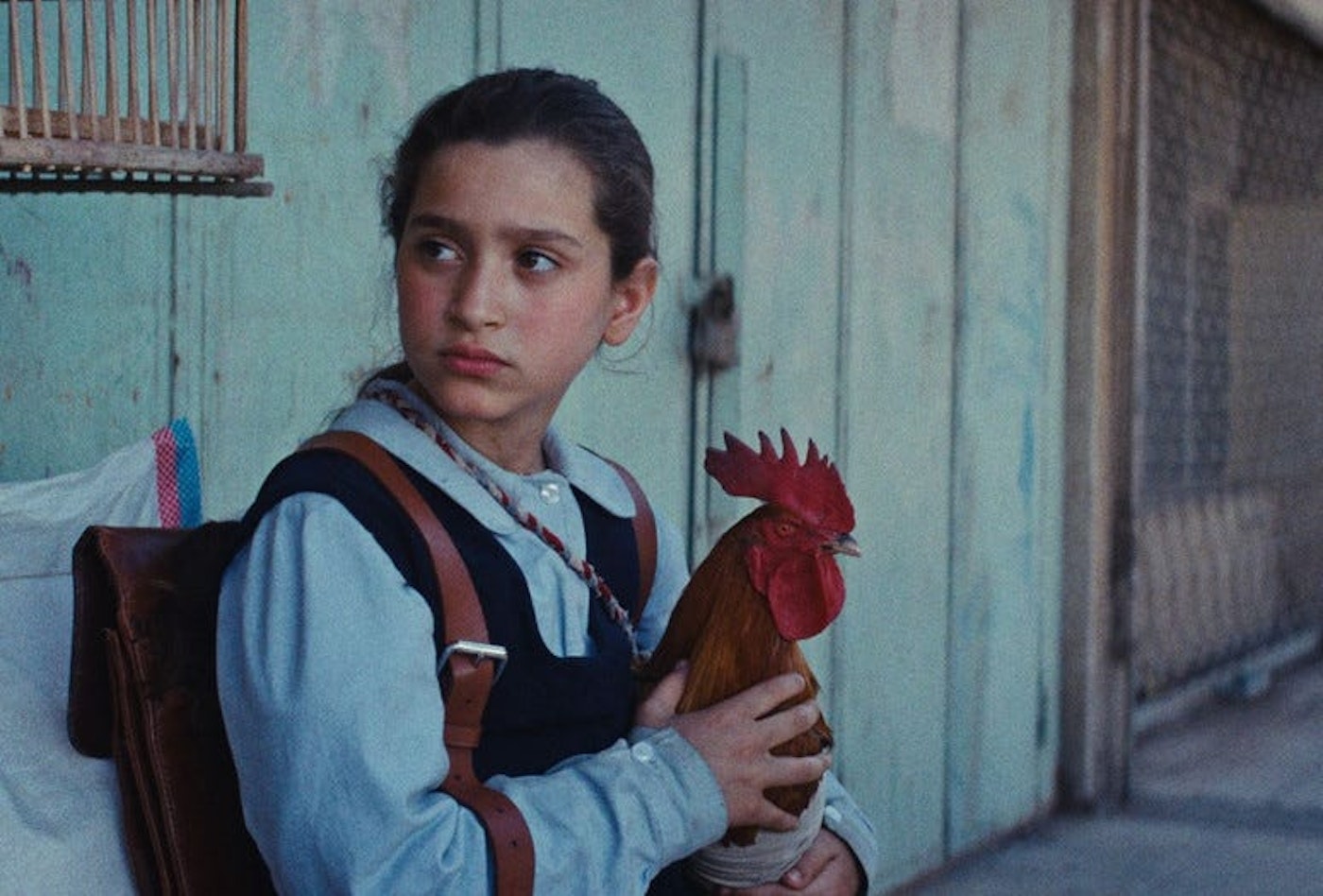
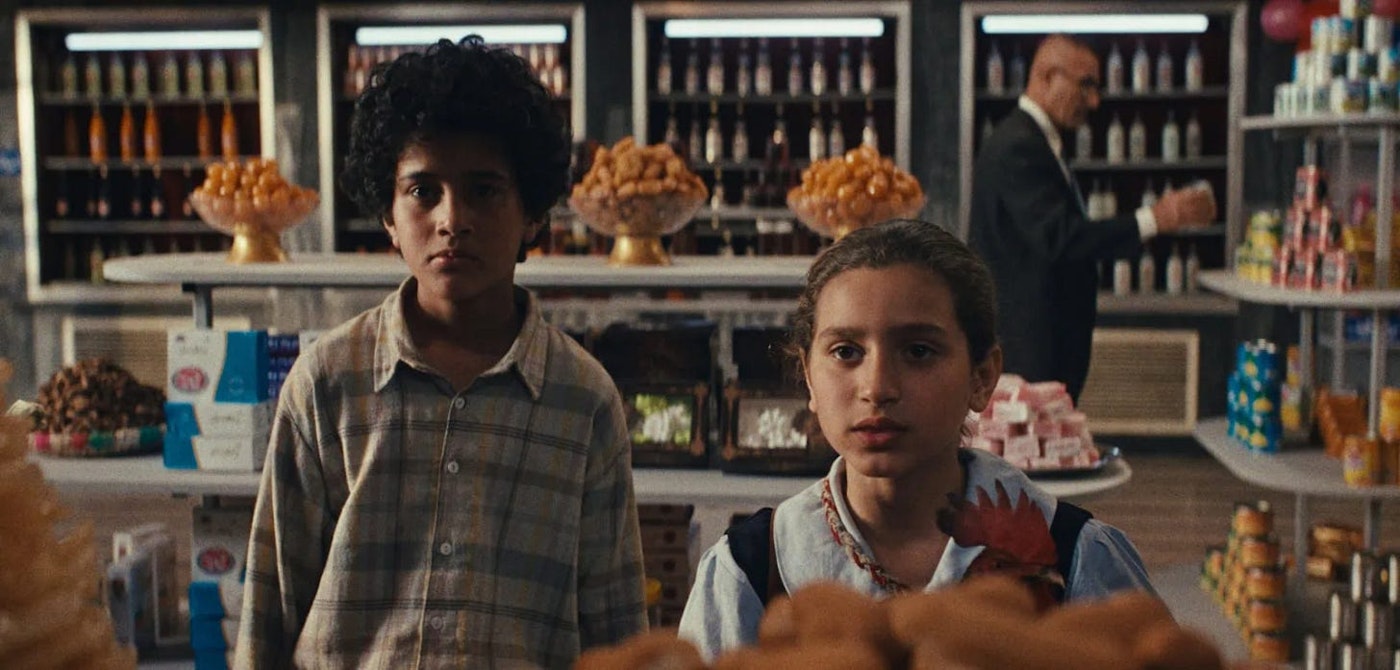
Directed by Hasan Hadi, the film explores the story of Lamisa, a young girl who is tasked with bringing a cake to school to celebrate Saddam Hussein’s birthday, except she simply does not have the money to make it. We follow Lamisa’s pursuit of finding each component in a country where everyone is fighting for basic necessities.
Through her travels, we are met with the absolute worst of humanity and glimmers of what’s left of the good, signalling a society far beyond the brink of collapse. Through her eyes, we see a big, bad world through the lens of childhood hope, but are often struck by the reality that the right to be a child is a privilege only afforded to some, reframing the importance of even a little red balloon. A child fixated on bringing a cake to school, not to over-indulge in sugar like her age mates, but to make sure her family, or in this case, her frail bibi (grandmother), isn’t reported by her slimy teacher. Mind you, all of this is for a man whose actual 50th birthday cake is so grand it could be claimed as real estate.

In watching Lamisa navigate a world rigged against her, we are forced to confront a truth too often ignored in political debate: when governments, ideologies, and international interventions clash, the casualties are not abstract numbers; they are children, families, neighbours, and communities forced to carry the debris of choices made far above their heads.
Importantly, both films remind us that those who endure suffering are far from passive spectators of the forces that shape their lives. They are living witnesses, negotiating the daily realities of survival and moral compromise. Their experiences are layered and complex, shaped by fear, necessity and stubborn hope. It is easy to reduce such lives to statistics, but cinema, at its most urgent, insists on the opposite.
The people in the middle, caught between censorship, oppressors dressed as saviours, and sanctions, are active participants in their own stories, making choices, taking risks and finding ways to preserve dignity and humanity even in the harshest conditions.
Perhaps sometimes in direct opposition to, or without the support of, their peers. And it is through these very acts, the insistence on living and loving despite everything, that the will of the people endures. These films remind us that to witness such lives is not only to see suffering, but also to embolden the unyielding power of ordinary people trying to shape their own destinies.

Mehek Ali
Mehek is a Pakistani creative with more opinions than she knows what to do with. She started her journey by creating videos on TikTok, amassing over 80,000 followers. However, her focus is now behind the camera. Mehek also loves the occasional deep dive into cultural commentary.
