
Yesteryear, Strangers and Millennial Feminism – The Real-Life Fictions We Write for Women
by Mariya bint Rehan in Culture & Lifestyle on 23rd June, 2026

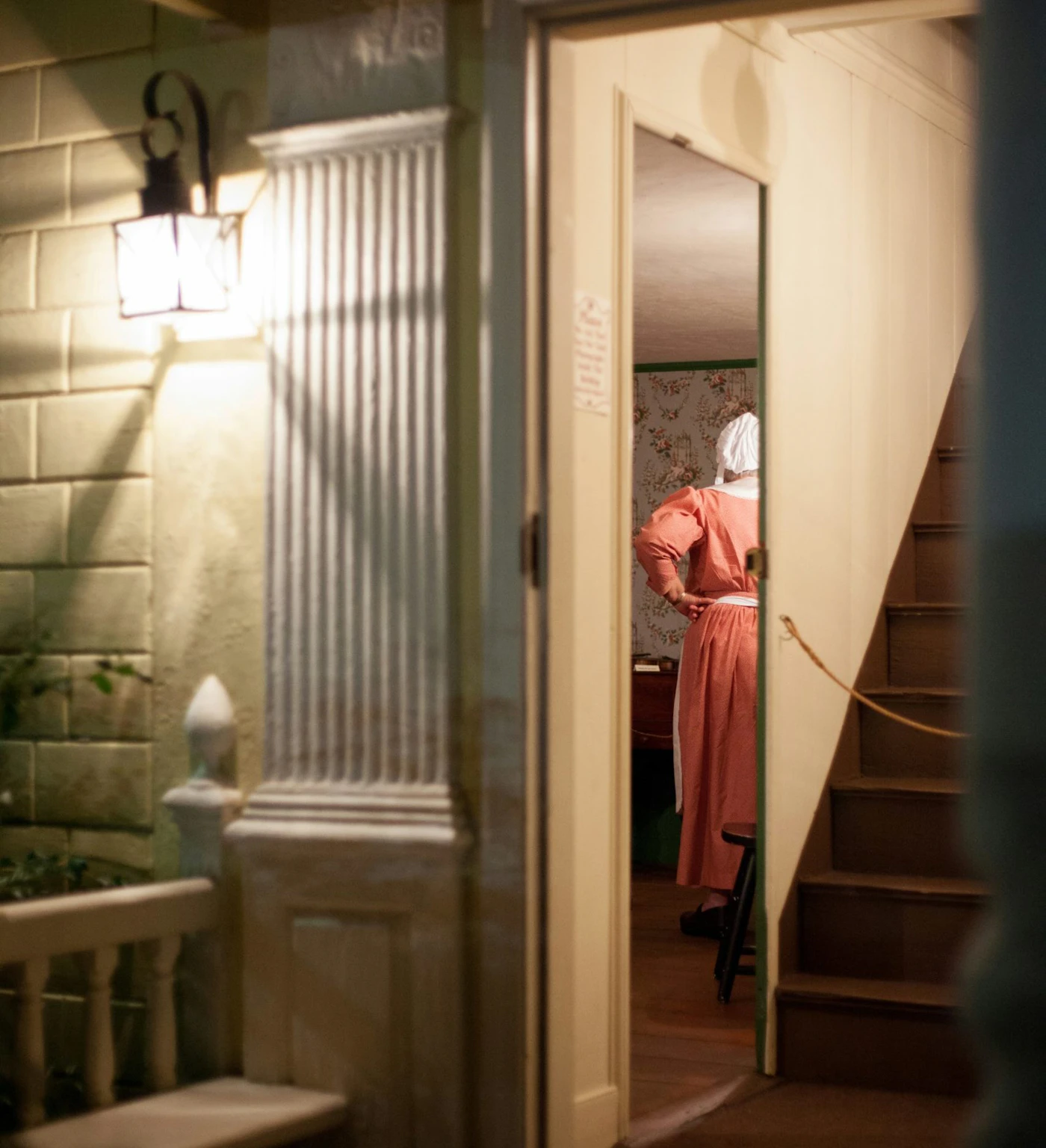
There are books, and then there are Instagram-famous books.
Yesteryear, a novel by Caro Claire Burke, which takes the trad wife as its central theme, is so deep into the latter category that the author has earned the sort of prime-time slots on late-night American talk shows usually afforded only to Hollywood blockbusters – a feat all the more remarkable considering we are witnessing first-hand the interminable death march of the written word.
While Yesteryear is riding the wave of literary virality, it is also facing the inevitable backlash that accompanies such visibility.
While the hot takes in both directions are coming thick and fast, it’s the wider obsession with Yesteryear which reflects a deeper truth about our cultural infatuation with the figure of the mother and our insistence on writing and rewriting her anew.
Alongside defining millennial feminists Lena Dunham and Lindy West’s recent memoirs, Emma Grede’s offering and the explosive Strangers by Belle Burden, it calls into question the very idea of female aspiration in a world forever ruptured by our digital habits and values.
Following conservative Christian influencer Natalie Heller Mills, on her path to internet trad wife phenomenon, the novel charts Mills’ journey from a young girl in an orthodox Christian American town, through a short detour to Harvard, and predictably into the arms of a prodigal, rich husband from an American political dynasty – one it turns out she can just about stomach. Mills is at once both the most likely and unlikely trad wife – she has a neurotic obsession with motherhood but is repulsed by it at the same time.
In this way, her experience reflects many of the contradictory feelings that underpin our fetishisation of motherhood in the world outside of Burke’s pages – we can’t seem to consume any kind of media without being confronted with the figure of The Mother, yet statistically speaking, she is a dying breed.
The book transcends beyond Mills’ contemporary-day woes of a media scandal exposing her prairie lifestyle as a nanny-and fertiliser-filled scam, and into a future steeped eerily in this idealised past. In foraying into the future, the book lays bare the logical endpoint of such purist fantasies and digital mimes. It’s able to draw neat conclusions on trad wives and the corresponding Manosphere movement, and witnessing the unravelling of both feels undeniably satisfying to us as moralising audiences.
Yesteryear’s success was almost as inevitable as our maternal heroine’s demise. A novel which takes on the cultural juggernaut that is the trad wife was always going to find fertile ground in the digital soil which nurtured her. The internet, which depends upon reducing everything into quantifiable and exploitable metrics, has created this searching instinct which has us all labelling, measuring and evaluating ourselves within neatly definable categories. The taxonomy of motherhood in particular continues apace.
While Beta, Tiger and Almond Mothers come and go, and while even their counterpart, the Girl Boss’s popularity and cultural relevance piques and wanes with the increasingly volatile economic climate, the trad wife appears to be a permanent feature of our collective imagination.
Like a record that is chronically stuck on a single, repeating note, we return to this character with passionate dedication.
The trad wife phenomenon is the result of the digital regurgitation of our swollen and overburdened maternal aspirations. She represents the outermost limits of our imagination for the mother and home-making role. If motherhood is the site for all our individual and collective hopes, dreams, and also fears, then as we enter an age of seemingly irreparably declining birth rates, the figure of the mother inherits increasing urgency and nightmarishly apocalyptic undertones. Yesteryear’s positioning as both tragicomedy and thriller is the ideal vehicle to carry this digital construct of the perfect, hated mum – there is a creeping sensation as we read the book that we are at the site of a crime; the end of conventional mothering as we know it, and we spend the entire novel trying to discern who the real perpetrators are.
Indeed, the genre lends itself beautifully to our collective habit of obsessive analysis – our sanctimonious probing into this life of surface and performance, as media consumers who love a virtue signal; we should ultimately be left facing our culpability in this homicide – how much is this digital resuscitation and death of the “traditional” mother our own making? The conception and consumption of the trad wife is riddled with these contradictions, and Burke’s writing exposes these inconsistencies a little too well – our unwelcome spectatorship, as a contemporary audience, into this anachronistic and remarkably dislikable character’s internal diatribes sits with the same unease as our feasting on such rage-baiting trad wife content every time we doom-scroll through our social media feeds.
The mediafication of motherhood – how we make the mother digitally intelligible to the masses in an age of seemingly limitless choice for women – depends upon an active audience. We know that by feeding the algorithmic beast that spawns her, we compromise the very values we claim to hold, but this contradiction is what defines our relationship with her – the right to propel her to stardom and tear her down at the same time.
We want to be both pacified by and actively braying at the attentive, fully consumed mother; a passion that feeds the engine that makes Mill’s virulent strain of parenting rewarding and profitable.
We are willing Mills towards a spectacular failure, and when we are rewarded with that spectacle, we are left only with the echo of our own death chants.
Yesteryear also exposes society’s impulse to idolise the mother – an instinct based on history, posterity and the passing of time. If our idea of conventional mothering depends upon legacy to both qualify its presence and justify its future, then Burke’s shifting tenses of past, present and future expose how tenuous our notions of this heritage really are. The novel ends in the future, amid a dark dystopian scenario in which Mills and her husband, Caleb, transform their ranch into a technology- and modernity-eschewing reimagining of the prairie past. This future-as-past note, which the book closes on, interrogates our concept of progress and the circular logic of reducing women to mere producers. Mill’s mother and mother-in-law, who represent the old guard of mothering, either defect to more forgiving and fluid ideas of gender essentialism or turn out to only be able to bear conventional ones because of how perpetually intoxicated they are. This rupture between a romanticised past and the current construct of the trad wife is exposed as a lie, and the future it promises is projected as an even bigger liability.
Yesteryear is not the only book that exposes our contradictory feelings towards motherhood, and this growing genre is not restricted to fiction. Emma Grede’s Start with Yourself – described as a new vision for work and life – achieved the kind of background hum of mediocre fanfare associated with all Kardashian-adjacent projects. What brought her press tour the clamouring attention necessary in this economy was her shrewdly marketed ‘three-hour mum’ gimmick – suggesting the key to success results from disciplinarily reducing your parental duties to a 180-minute window. In the amphitheatre of performing womanhood, Grede was constantly asked and continuously presented this idea, as though it was a matter of mere will and sacrifice –
implying women aren’t getting further ahead in the world of work because they were too busy choosing their children – framing motherhood as though it were a lazy form of recreation and leisure, and an obstacle in the path of economic productivity.
Even more ludicrously, as though entrepreneurship is an accessible career route, and capitalism is not dependent on mass exploitation and preservation of the 1% that makes Grede’s kind of wealth near impossible for the rest of us.
As we shift gears into a new stage of debate, with weary millennials eager to expose the fallacy of ‘having it all,’ the seance of the girl boss feels as anachronistic as Yesteryear’s nightmarish future, and yet here we are giving it the oxygen of serious debate.
While we are able to interrogate the autocratic ideas of motherhood present in the trad wife construct, many of us are willing to accept its opposing mythology. This zero-sum approach to mothering reveals how uncomfortably motherhood sits in the system of capital.
Belle Burden’s aforementioned explosive memoir, Strangers, is a more cautionary tale rooted in the economic disadvantages of motherhood. Strangers – notably set in old-world New York – is also charged with the brutal hammering of the final nail in the coffin of these bedrocks of femininity – love and marriage. The undoing of Burden’s twenty-year marriage exposes even the romanticised love of the past as a kind of fiction, and her financial vulnerability is cruelly exposed; we are left searching the text for the seam where reality meets our own delusions. We pour over the clues in Burden’s prose to find the rift we can attribute to her husband’s betrayal and greed. This hunt for certainty spills over into the Oprah studio, the podcast mic, and the New York Times profile, becoming a kind of amorphous hypertext that the novel assumes, leaving both fact, fiction, opinion, and sensationalism in its wake. This is exemplified further by the recent expose on the novel, which reveals inaccuracies in Burden’s account of events – something readers have expressly stated they do not care about; her narrative has tapped into a kind of restlessness about gendered norms that means the truth is ultimately irrelevant. Burden’s novel, and the attention it has garnered, shine a blue light on how shifting notions of art, performance and media impact our impressions of truth and morality.
Though the most extreme form of femininity-as-performance plays itself out in the mother, and the trad wife is the most acute form of this cosplay, there are pressures to perform idealised versions of femininity that are not restricted to the role of the mother. The roots of this craft trace themselves beyond the digital world. While the canvas, page and medium of film have erstwhile been the stage through which we have contested notions of femininity – and despite the birth of the novel ushering in a kind of liberation for women – the old arbiters of taste and societal values were an elite few who had the capital to wield these mediums. Surely, in this Kardashian age of plural narratives that the internet has birthed, women can hope for a kinder playing field?
Though the internet and social media are novel, incisive tools, we still use them in the time-honoured way: to hold women’s worth hostage to harsh public opinion – though this time the threshold is raised and the frontiers are pushed forward intimately, as we are consuming life-as-content. Dunham and West’s memoirs are considered affronts to the brands of millennial feminism their younger selves assertively upheld, with consumers of the confessional style of art feeling entitled to demand their own neat, purist conclusions – seemingly unable to move on from yesterday’s ideals, nor embrace the uncertainty represented in the real lives of their self-appointed feminist visionaries.
Rather than create fluidity in our constructs of female aspiration, the internet appears to have created a multitude of rules that define ever smaller, more niche micro ideals – holding women to more exacting standards rooted in the details of their lifestyle choices.
From their personal relationships to their bodily weight, we are reading into their lives with an absolutist rule book. While the illusion of a more pluralised dreamscape for femininity persists, ultimately those with economic capital continue to define the parameters of what’s acceptable through these ideals we have an illusive sense of ownership of. The Kardashians, the Dunhams, the Burdens, the Gredes and the trad wives – who are shaping ideas and conversations backstage all wield influence through old networks of money and power. The internet has created a deception in which the barriers to accessing these ideological mascots are eroded. Still, it only serves to create a parasocial obsession that both distracts and disempowers us by making us believe the comment section is where our agency and empowerment begin and end, vicariously living through these ideals presented on screen, the ultimate aspiration.
Fourth-wave feminism, shaped by our digital habits that have warped the boundaries of fact and fiction, reality, content and lifestyle as an extension of personal brand, is now subject to that same contortion. As narrative-making and demanding machines, we have always fashioned the world into neat concluding stories to make up for the lack of certainty in our own lives. Since the beginning of time, we have thirsted for a well-presented ending because we are denied knowledge of our own conclusive ends.
Our expectations of literary narrative have now fully spilt into real life, and this time, we demand to shape the defining feminine characters of our time and punish them at the same time. We insist upon an agreeable conclusion to these women’s lives – which are being played out in real life and time – because their lives have become content for us to consume; their bodies the landscape through which we demand moral and narrative clarity, and their futures a seemingly crowd-funded project we lay claim to.
It begs the question of whether dominant ideals shaped by a minority truly provide more space for women’s freedom at all, or rather an explosion of narratives, meticulously policed by the panopticon of the digital world.
In an age of user-generated content – where the right to publish is radically democratised – and as we become increasingly trapped in economic uncertainty, our digital brands become the last vestige of control. As our authorship of our own lives becomes limited to how we present ourselves on screen, the stakes of debate centred on these avatars become intensified. We have become both consumers of this women-as-media genre, where we command moral execution, and producers of the same media in which we feel compelled to invest our whole selves into polemic debates. We are living in the Truman Show for the modern age – but this time, the audience isn’t watching, it’s in us, as in Yesteryear, we are the “angry women” of our own internal narrative (the imagined spectators whose jeers Mills is constantly weighing up in her mind); surveyor and surveyed at the same time – creating a cultural inertia which holds us hostage to increasingly static ideals.
The two options the supposedly populist forces of the internet present us with are binary – of being free and single or paired, parenting and entirely consumed; we are pushed into opposing sides of a reductive debate that is remote from much of our reality. This is particularly the case because, although we couch the debate concerning motherhood versus singledom and girl bossing in internet speak, ultimately, motherhood is increasingly out of financial reach for most women due to the rising cost of living, childcare, education and an eroding social fabric. We are witnessing motherhood becoming aspirational, purely based on the capitalist logic of it being elusive and inaccessible.
The free-market economy has made one of our most basic functions as humans – to herald life – unattainable, and its cannibalistic nature means it now seeks to profit from this final checkmate. Motherhood has a new dressing as a class signifier.
And motherhood is ultimately the site of the biggest duel of our time, one that bears the entire weight of the future of the human race – the radical meeting of free will and compulsion. Where women give their entire bodies and lives up, often with no material recompense. The very matter from which motherhood is carved cannot be tamed by the market forces of capitalism because it fundamentally depends upon a non-transactional exchange. The discourse of to-mother or not-to-mother will always be dizzyingly contradictory because it is both necessary and distracting from the unrelenting forces of capitalism.
It is a relic of a history as old as time, in which value existed outside of financial measures; it’s also the most oft-wielded tool in ideological memory and present-day culture, and now, motherhood has adopted both the desperate hues of existential necessity and the shiny window dressing that end-stage capitalism necessitates. Today, these contradictions persist, in addition to economic factors, because we want to be mothered.
We bemoan the loss of the village and the support network made up of women who nurture us – but we don’t want to provide the material, social or emotional support to the women who are picking up this labour.
We claim we support female aspiration no matter how it looks, but the mother is still the ideal we measure women for and against – whether positively or negatively. Grede still has to evoke her image to attain the kind of attention necessary in a press tour.
Our mania concerning this heteropessimistic genre of female literature is telling of this reality. We balk at Mills because ultimately she is not the genuine committed mother and wife, reducing motherhood to a mere aesthetic performance – her resistance to mothering is what makes her simultaneously relatable and detestable. We mourn the end of Burden’s marriage, and the disappointment of a love that ultimately reveals itself to be fiction pains us because it is the unravelling of what we have always been conditioned to yearn for ourselves. We revile Dunham and West because they have not given us the ending we feel we deserve – happily single or pregnant and performing. And therefore, we have to reconcile with the fact that we want something from women and mothers, and the narrative fabric of reality, that we are too wrapped up in identity politics to admit. As audiences, we punish them by the same standard we do not want to voice or name. We are not willing to make the ideological and physical sacrifices necessary for women to perform the way we want them to, but we are equally unable to forgive them for failing to. To be honest about their faults would be to expose our own.
For most mothers, our actual truths sit somewhere between the dream that is peddled to us within these opposed narratives – between the three-hour motherhood of Grede and the sort of perpetually barefoot, vaccine-free, farm-like explored in Yesteryear. Both polar lifestyles are ultimately choices afforded to those with the economic capital (and health insurance) to make them a reality. The danger comes when we lose that delicate balance of toil and joy to the blunt-force nature of digital discourse.
Motherhood for any of us will never match up to the dream or nightmare we project on screen, because it is the antithesis of performance, the ultimate ‘put your money where your mouth is’ of the material world.
When we reduce it to dress-up, or denigrate it to an elaborate trap, we suffocate the delicate human instincts that make it a workable reality – potentially the last remaining human part of us that resists internet commodification. When we put motherhood through the shredding forces of the quantifying algorithm, we are abstracting it in a way that is largely unhelpful for all of us, and which ultimately – if we look hard enough – exposes the lack of free will in our own lives.
What these real, forged and herd-shaped narratives and our obsession with them expose is a lack of agency dressed up as the ultimate form of freedom. It is the suffocating forces of the economy placating us with a Sims-like simulation designed to vent out our frustrations. Along with the death of media that we cathartically consume and our waning attention spans, we have begun to project narrative expectations onto our own and others’ lives as depicted on screens, with all the hunger of short-form appetite.
The demise of traditional media and traditional storytelling creates the delusion that we are in control – whether through these new forms of media between our thumbs, or through their supposedly democratising forces – and through this we begin to believe that shaping our projected narratives is enough. Ironically, just like tech is deployed by the forces of capitalism, so too are the stock characters in our life stories – the protagonist of the mum herself. The bleeding of reality and fiction, the internet and the real world, the content we consume and the values we live by, and ultimately the economic decay that has caused them, should not have us morphing back into our screens – it should have us addressing off-screen solutions.
The alternative is us writing and rewriting the same story into oblivion – punishing the heroines of our own creation through the dying medium of the page and the suffocating background of the screen, amongst a bloody crime scene in the real world we are totally oblivious to. Like Yesteryear’s protagonist, Mills, we will wake up in a future and a self we don’t even recognise.

Mariya bint Rehan
Mariya is a mother and author, with a background in Policy and Research and Development. Her first book published by Kube Publishing, The Muslim (M)Other is a series of essays which interrogate the political, cultural and digital environments in which Muslim women mother. You can find her on Instagram as @mariyabintrehan
