
Palestine Action: Why Their Sentencing as Terrorists Is Unprecedented & Dangerous
by Zahra Farooque in Palestine on 23rd July, 2026

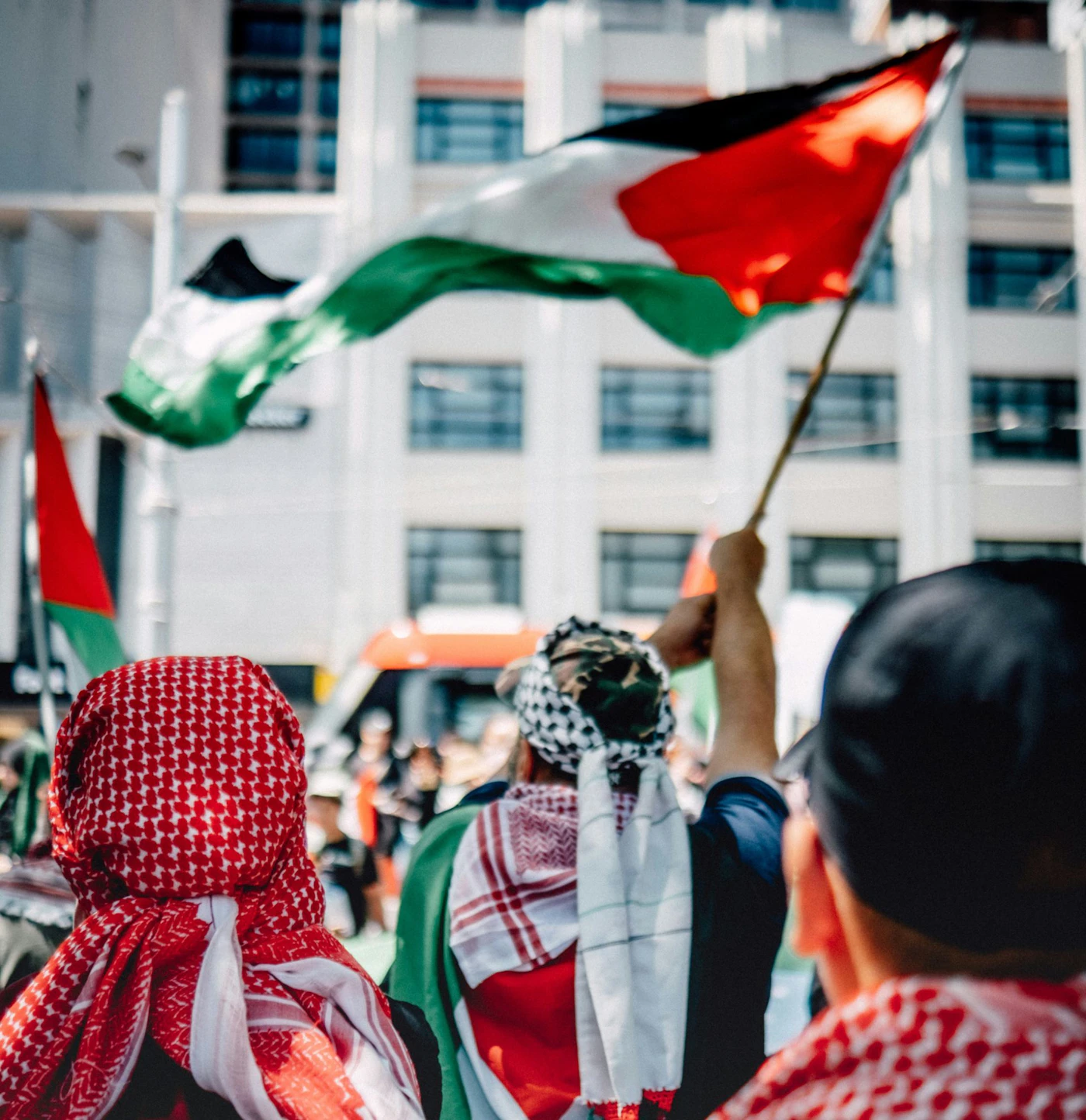
‘Nobody in the world, nobody in history, has ever gotten their freedom by appealing to the moral sense of the people who were oppressing them.’ This is what the Filton 6 understood when on 6 August 2024, they broke into an Elbit Systems factory and dismantled 40 killer drones that were being manufactured to murder Palestinians in Gaza. At this point, Israel was almost one year into its genocidal campaign, and no one was doing anything to stop the violence. Israel had disregarded every principle of international law, targeting countless hospitals, schools and universities to the point where, in July 2024, the Lancet published that the death toll of Palestinians in Gaza was well over 75,000. It was against this backdrop that Britain’s own role in supporting the genocide could not be ignored.
Elbit Systems, Israel’s main weapons manufacturer, has been operating on British soil for over 20 years. This has made the UK a core pillar in supporting Israel’s ethnic cleansing of Palestinians for decades and, in the recent genocide, a firm sponsor of Israeli war crimes in Gaza. After countless protests, petitions and letters written to MPs, the British government still refused to take any accountability, and activists decided to take matters into their own hands by taking direct action to stop the flow of weapons from the UK to Israel.
The tactic of direct action is deeply rooted in British tradition, employed by peasant revolts in the fourteenth century and more recently by the Suffragettes.
When it came to Palestine and protecting the lives of Muslims, the tactic was criminalised as terrorism, and the Filton case marked a turning point in the government’s response to direct action as a form of protest.
The Criminalization of Direct Action
For the first time in British history, direct actionists were arrested and subsequently sentenced as terrorists despite not being charged with a single terrorism offence. The sentencing process recommended community service in relation to the charge of criminal damage, yet Justice Johnson used the terrorism connection to sentence the four Filton defendants who were found guilty of the charge with an average of five years in prison. The consequences of the terrorism label are far-reaching. The activists will have to serve a minimum of two-thirds of their sentence instead of the usual one-third for criminal convictions and, on release, will be on a terrorism notice for 15 years during which they will face heavy surveillance. If they breach any of their conditions during this time, they may face being sent back to prison.
Whilst unprecedented, the Filton case could not have been treated in this way without the terrorism framework that has been in the British toolkit since the twentieth century. An early usage of terrorism-like laws is seen in the Anarchical and Revolutionary Crimes Act passed in 1919 by the British colonial government in India to clamp down on a growing nationalist movement. The Act has some striking parallels with the use of terrorism legislation in the Filton case. Most notably, the law gave the British the power to arrest any person without trial for up to two years and imposed strict censorship on the press, allowing for trials to be held in secret without a jury. In the Filton case, those arrested spent up to 18 months in prison without trial. Any reporting on the terrorism connection in the first of the four trials for the case was subjected to reporting restrictions that meant that the jury was unaware that the defendants would be sentenced as terrorists.
Even though these instances are more than a century apart, recognising the parallels between the Anarchical Revolutionary Crimes Act and the terrorism legislation used in the Filton case reveals a wider pattern in the British state’s historic response to political dissidents.
The question that must be explored is what happens when the British government starts to blur the line between protest and terrorism?
The aftermath of the Act saw British forces open fire on thousands of peaceful protestors at Jallianwala Bagh when they gathered to express their opposition to the law. Men, women and children were trapped in a square and shot at for daring to defy the government’s own political agenda. This is how far the British government has gone to repress protestors in the past, and this is a reality we must reckon with.
Related Reads
Professor Conor Gearty, an expert in the field of counterterrorism, has explored the evolution of terrorism laws in great depth. He traces the development of the legislation from those who resisted imperial control to what was construed as ‘the enemy within’ post-911. This was one that disproportionately targeted Muslims whose regular religious practices were identified as markers of terrorism. Gearty establishes that ‘the value of the definition of terrorism is that it has no definition,
that it is a malleable concept that can be deployed in the hands of power to suit and promote certain international interests or to secure coercive conduct against dissidents.’
It is important to understand that it was Israel’s own interpretation of terrorism that allowed Palestinians to be dehumanised to the point that Israel’s project of ethnic cleansing has been left unchecked by the global community since the Nakba in 1948. Islamophobic narratives form the backbone of Israel’s presentation of Palestinians as terrorists to the extent that senior Israeli politicians like Nissim Vituri can brazenly declare that every child born in Gaza ‘is already a terrorist from the moment of his birth.’ It is this rhetoric, parroted over decades, that has given Israel the legitimacy to carry out its onslaught on Gaza since October 2023. The label of terrorism has acted as a cover for the mass murder of men, women and children, demonstrating the kind of depravity that terrorism can justify.
Now, in the UK, proximity to the Palestinian cause is what has led to protestors becoming the new ‘enemy within’. The rise of the Israeli-funded far-right in Britain in itself demonstrates that to Israel and its allies, Islam, Muslims and anyone who aligns themselves with their cause are seen as an enemy. When upholding the terrorism connection for the Filton 4, Sam, Lottie, Ellie and Fatema-Zainab, two students, a domestic abuse worker and a nursery teacher, the justification given was that they were trying to influence the British government. Where the government was protecting the interests of a foreign entity to produce the weapons being used in a genocide; what actually made them terrorists was asserting the Palestinians’ right to life over British profits.
The Legal Impact of the ‘Terrorist Connection’
The implications of the Filton case for protest movements across the UK are already being felt.
Activists accused of taking direct action are now commonly dealt with as terrorists and are set to be held on remand for years before they reach trial.
A simple social media post is now grounds for someone’s home to be raided and their entire livelihood to be put at risk. The recent charge brought against the senior barrister Rajiv Menon KC for contempt of court because of the contents of his closing speech means that even legal teams are severely restricted in their ability to defend their clients in such cases. The draconian crackdown on freedom of expression and the use of terrorism legislation to clamp down on political dissent is alarming. The unprecedented sentencing of the Filton 4 has only made the case for why they took action in the first place stronger, because a government that is actively supporting genocide cannot be expected to develop a conscience overnight.
References:
- Shakur Assata, Assata: An autobiography. Laurence Hill books, 2001.
- Counting the dead in Gaza: difficult but essential
-
Stop Arming Israel campaigners give Elbit a run for its money
- A Critical Study of the Rowlatt Act and Its Aftermath
-
Homeland insecurity: the rise and rise of global anti-terrorism law
-
Senior Israeli official says all Palestinian adults in Gaza ‘should be eliminated’
- Garden Court North expresses continued solidarity with Rajiv Menon KC

Zahra Farooque
Zahra Farooque is a Research Officer at CAGE. She became involved in the student movement for Palestine through the UCL encampment in 2024 and has since continued her activism with the Association of Student Activism for Palestine (ASAP). Zahra is one of the Filton 25, a group who are alleged to have dismantled weapons produced by Elbit Systems, Israel's largest weapons manufacturer. She is currently awaiting trial, which is scheduled for September.
